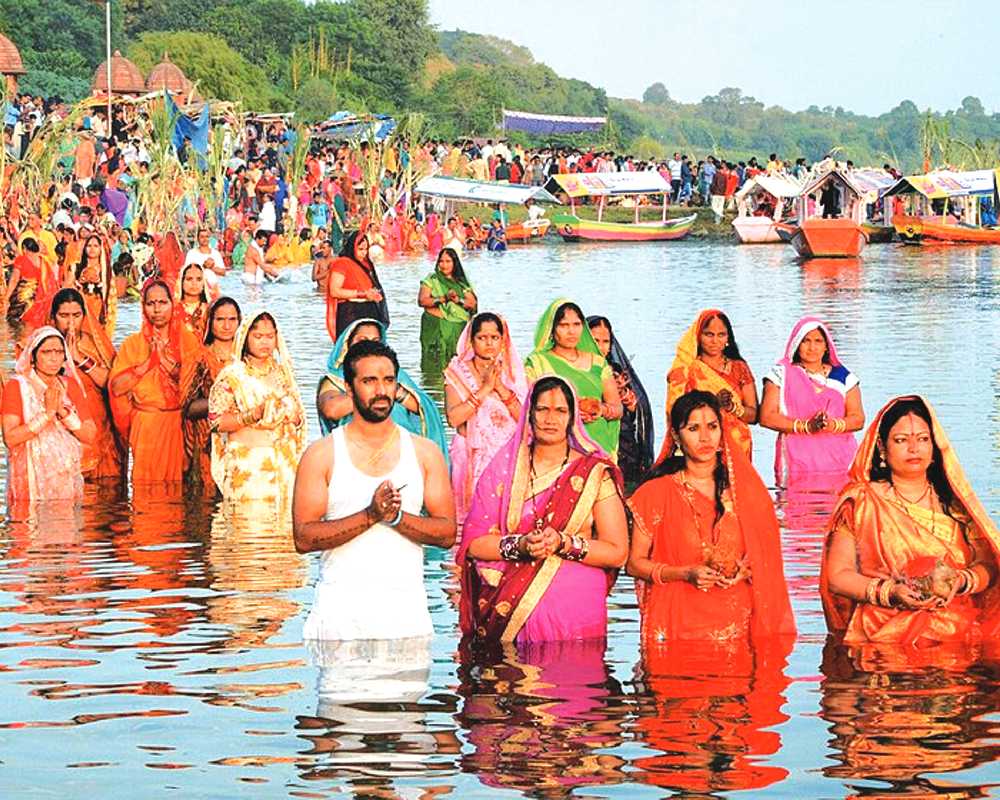
The Chhath mahaparv is one of the most sacred and celebrated festivals of faith and worship in India that is not merely a practice but it is a living custom that captures the very spirit of Bihar rural life. Since the time when the festival was rooted in the cultural soil of the eastern part of India, as the festival used to be limited to the villages and towns of Bihar, the festival has since cut across borders and is currently recognised as a celebration of spirituality, community and nature throughout the world.
A Global Celebration of Faith and Nature The winds of globalisation have broken the oceans and continents of Chhath. It is equally celebrated today not only in the states of Bihar and the eastern part of Uttar Pradesh but also in such states as Delhi, Maharashtra, Punjab and Gujarat. The festival shines on the shores of India, but is also lit in the hearts of the diaspora and some countries including Mauritius, Fiji, Suriname, South Korea, Germany, the United States, the United Kingdom and even in Trinidad.
Fundamentally, Chhath is a celebratory occasion that pays tribute to the Sun God (Surya Dev) and Chhathi Maiya who symbolises the everlasting relationship between man and nature. It shows that as sunrise marks new lives, so sunset is a thing of beauty and purpose, as it helps us to remember that it is not the end of everything but it is a new beginning. Life is a circle that never ends and so is the faith, which keeps this old tradition alive. The Spirit of Chhath Resides in Its Folk Songs
Since Chhath is an innately people festival, it is inherently infused with folk expression. It is driven by folk songs — each ceremony, each sacrifice, each religious action has a folk song, handed down across the generations. They do not just narrate the rituals in these songs but make them sacred. The singers call for purity, devotion and a continuous connection with God with the help of melody and verses.
Since homes are being cleaned and grains are being washed, the offering is prepared and the holy basket (daura) is carried, all the steps of Chhath have songs. The women worshipers sing to the Sun God and Chhathi Maiya in simple and yet very deep lyrics. These are the emotional and spiritual soundtrack of the festival — the true essence of the festival. In one of such songs, a worshipper requests Chhathi Maiya to give him a daughter — a very unusual and touching request in the traditionally male — dominated society: “Runki Jhunki beti maangila, padhlo panditwa daamad, hey Chhathi Maiya.”
(I pray for a daughter, Runki Jhunki, and an educated son-in-law, O Mother Chhathi.)
Not only the maternal devotion is expressed in this touching lyric, but it is also the praise of the importance of daughters, which is a tribute to the spirit of progress inherent in folk traditions. Songs of Purity, Prayer and Everyday Life The significance of cleanliness and sanctity is brought out in many songs. In one the ritualists urge a parrot not to ruin the grains drying to the festival:
“Maarbo re sugwa dhanush se, suga gire murjhae.”
(I shall shoot the parrot with a bow if it dirties the grains.)
The songs preserve that mixture of the sacredness and simplicity with which Chhath is characterised through such playful verses. There are other songs about asking family members to take some things necessary in the rituals — coconuts at the Patna market, bananas at Hajipur and other offerings are the direct by — products of nature. All of the ingredients of the festival be it the soop, daura, ghee, deep or the fruits such as sugarcane, ginger, carrot and radish are presents of the natural world.
Journey to the Riverbank: Songs of Faith and Togetherness At the appropriate moment to give arghya (the ritual offering) to the rising and setting sun, the devotees (usually women) go in procession to riverbanks or ponds, with the sacred baskets on their heads or bamboo slings (bahangi). This image is best described in a popular song: “Kaanch hi baans ke bahangiya, bahangi lachakta jae, hoi na balam ji, kahariya bahangi ghaate pahunchae.”
(The bamboo sling sways gently, my beloved, as we carry the offering to the riverbank.)
They are not merely songs, but they are a living journal of faith, family and unity between people and nature. The Tradition of Devotion Through Generations Numerous songs are about the personal motivation to the vow of a devotee — whether it is the well — being of a child, husband or loved one.
“Hum kari la Chhath baratiya se unke lagi...”
(I perform this Chhath fast for the one I love...)
These folk songs have been held back in oral tradition and are as old as the festival itself. Although their songs stick with tradition, folk singers have put them into new perspectives which have made them lively once again. The Chhath geet (songs) have been made eternal by the chanting of vindhyavasini Devi and Sharda Sinha and even modern artists like Anuradha Paudwal have helped maintain this musical tradition.
The Enduring Melody of Faith Each of the stages of Chhath is attended by song, starting with the first rite through to the last immersion. The festival starts and concludes in music-religion in song. These songs are not mere memories to these millions of people who are away from home but emotional anchors. To the Bihari and Purvanchali diaspora spread all over the world, the folk songs of Chhath represent a connection between the past and the present, home and exile.
They bear the smell of their soil, the flow of their rivers and the tone of the voice of their mothers. When these tunes are heard even miles apart they rouse the same faith, the same tears of delight and the same feeling of belonging. So Chhath is not only a festival it is an ode to soul. Its music goes out of the own hearts of the people to the heart of nature and it will make us remember that faith as the sun sets but it always comes up.