Madrasa count in MP drops from 2,689 to 1,600
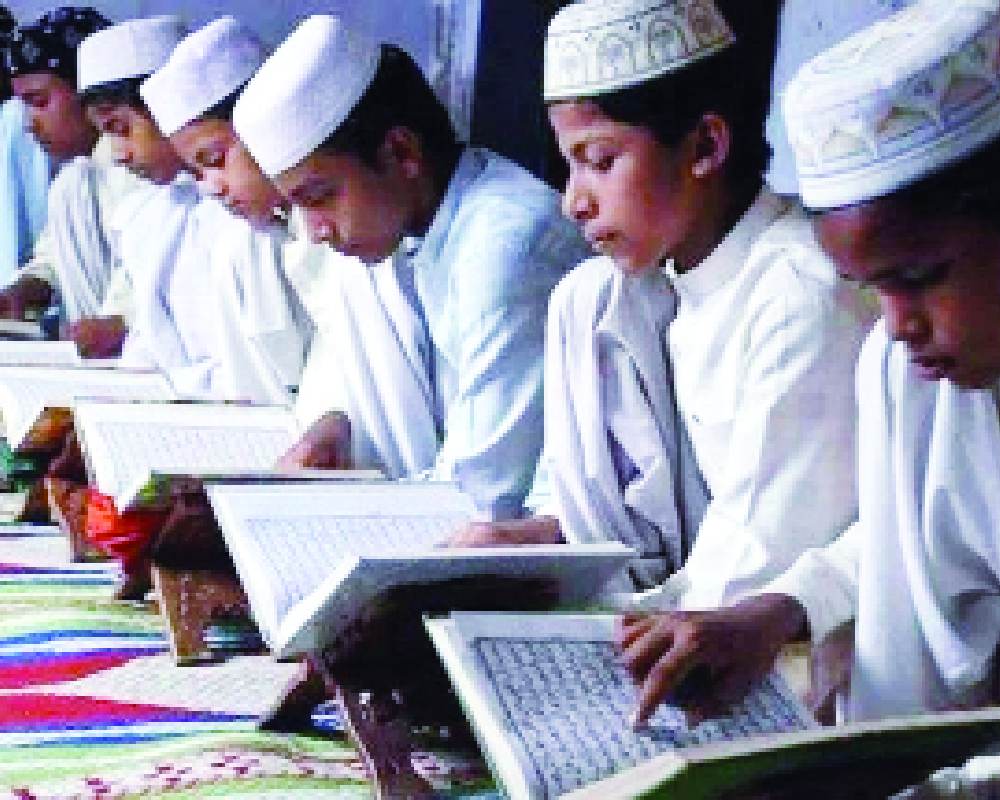
The number of Madrasas in Madhya Pradesh, once considered the backbone of Islamic and modern education for thousands of children, has collapsed to less than a third in just a few years.
From 2,689 Madrasas affiliated with the Madhya Pradesh Madrasa Board in 2019, the figure has plunged to just about 1,600 between 2022 and 2025. Now, with the renewal process for the current session nearly over, barely 750 have applied for recognition.
The sharp decline, operators and insiders say, is not accidental but the result of deliberate policy neglect and bureaucratic strangulation.
The state Government stopped grants to Madrasas in 2021 without any notice or official order, abruptly cutting off the only financial support that kept these institutions running.
Until then, every graduate teacher in a Madrasa received `72,000 annually, while teachers with a BEd degree were entitled to `1.44 lakh — limited to three teachers per institution.
The withdrawal of this modest aid, say operators, has dealt a death blow to most Madrasas, leaving them unable to pay teachers, rent premises or meet administrative expenses.
Across districts, Madrasas have either shut down quietly or are on the verge of closure. A Madrasa operator from Jaura in Morena district, Pervez Qureshi said he had no option but to close the institution and issue transfer certificates to his students.
“Without grants, it is impossible to continue. We have been forced to shut down,” he said.
Another operator from Arif Nagar in Bhopal said the renewal process itself has become a nightmare, with the Government making it mandatory to produce a registered rent agreement for the premises.
“Private schools have been exempted from this rule, but Madrasas have to comply. On top of that, the renewal fee of around `6,000 through MP Online is a huge burden,” said Kafeel Ahmed, who runs a small Madrasa in Indira Nagar.
Officials of the Madrasa Board admit that the numbers have dropped drastically. In Bhopal alone, which once accounted for the highest concentration of Madrasas in the state, only 215 have applied for renewal this year.
According to official estimates, nearly 90 percent of all functioning Madrasas in Madhya Pradesh are located in or around Bhopal — a concentration that is now under serious threat.
What was once a simple offline system has now been turned into an obstacle course. Earlier, the process of recognition was largely manual, and Madrasas operated with some flexibility. But now, the entire system is digital, with every student’s admission verified through the Samagra ID.
While the Government claims this ensures transparency, operators say it has made the system inaccessible to small institutions that lack digital infrastructure or funds.
The Madhya Pradesh Madrasa Board was formed in 1998 to modernise religious education and integrate mainstream subjects like Hindi, English, Science and Mathematics into the curriculum.
For a time, it worked — thousands of children from poor families studied in Madrasas and went on to higher education and jobs. But today, that vision stands crippled.
With financial aid gone, technical hurdles rising, and official indifference deep-ening, the very survival of Madrasas has come into question.
Operators allege that the decline is not administrative but political. A Madrasa operator from Bhopal’s Putli Ghar locality, who was forced to close his institution, said bluntly.
“The BJP Govern-mentdoes not want Madrasas to exist. Every rule is designed to make us fail. Only those who have private income or donations can somehow continue. By the next renewal in 2028, maybe only 20 Madrasas will remain in the whole state.”
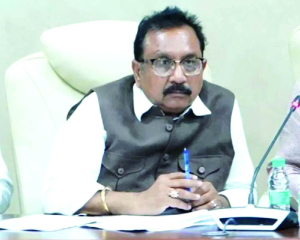
School Education Minister Rao Uday Pratap Singh, who is also chairman of the Madrasa Board, refused to comment on the issue. The Board functions under the School Education Department, yet the rules for private schools and Madrasas are entirely different, creating a dual system that has pushed most of these religious schools to the brink.
What was once a network of over two thousand educational institutions providing both religious and formal learning to marginalised children is now being quietly erased from Madhya Pradesh’s map. For hundreds of teachers and thousands of students, the closure of Madrasas means not just the loss of a classroom — but the slow disappearance of an entire system of education and identity.