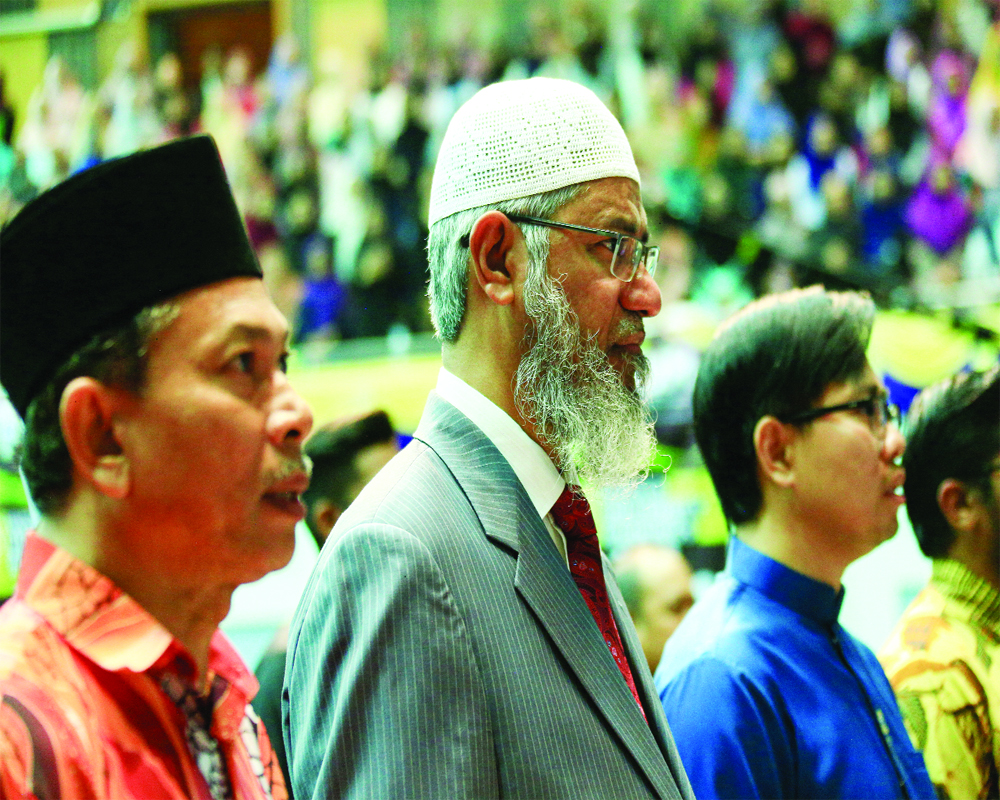
As diplomatic gears turn ahead of the high-profile ASEAN Summit in Malaysia, the Malaysian High Commissioner to India, Dato’ Muzafar Shah Mustafa, has spoken on India’s long-pending extradition request for Zakir Naik, a controversial Islamic preacher wanted in India on serious charges, including money laundering and incitement to terrorism.
In a phone conversation withThe Pioneer on Tuesday, Ambassador Muzafar Shah said, “We are fully committed to cooperating, but as I mentioned earlier, this must proceed through the appropriate legal and judicial channels. Both countries have an extradition treaty in place.”
His statement comes at a pivotal time, as speculation grows over whether Prime Minister Narendra Modi, who is expected to attend the ASEAN Summit later this month, will formally raise the issue with Malaysian leadership during bilateral talks.
Foreign policy analyst Robinder Sachdeva toldThe Pioneer, “This is the right time for India to raise Zakir Naik’s extradition. ASEAN is a major diplomatic platform where heads of State from across Asia and the United States will be present. If Malaysia has any conditions, let them be put on the table — but India must raise the issue now.”
Zakir Naik, who refers to himself as a non-resident Indian, fled the country in 2016 after Bangladeshi investigators linked one of the Dhaka café attackers to his radical online sermons. Since then, India has revoked his passport, declared him an offender, and sought his extradition from Malaysia, where he was granted permanent residency.
The Indian National Investigation Agency (NIA) and Enforcement Directorate (ED) have accused Naik of laundering substantial sums of money, promoting extremist ideologies and delivering speeches that allegedly incited violence and terror acts. International scrutiny of Naik predates his Indian charges. In 2010, both the United Kingdom and Canada denied him entry, citing concerns over his inflammatory rhetoric.
The controversy around Naik has deepened with recent revelations from the Delhi Police Special Cell, which is reportedly investigating his alleged links to the 2020 Delhi riots. Officials have arrested Khalid Saifi, a close associate of Delhi riot accused — who allegedly met Naik in Malaysia before the violence broke out.
This fresh angle adds another layer of urgency to India’s push for extradition, suggesting that Naik’s influence may extend beyond digital sermons into direct connections with individuals involved in civil unrest.
Naik’s case is part of a broader campaign by India to bring back high-profile fugitives. According to information presented in Parliament, 33 individuals accused of major economic crimes — including Vijay Mallya, Nirav Modi, Mehul Choksi, and others — have fled India. Despite Interpol Red Corner
Notices and formal extradition requests, many remain at large, particularly in the United Kingdom, which has become a preferred haven for white-collar offenders.
Naik’s continued presence in Malaysia has long been a point of diplomatic friction.