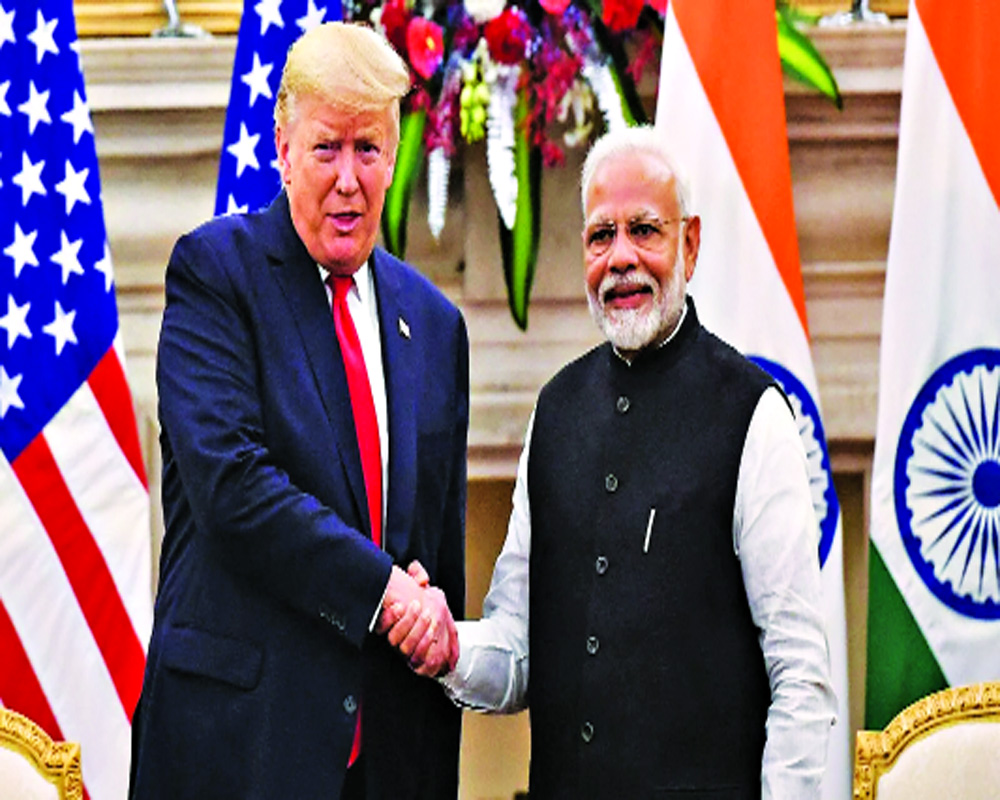
Global deglobalisation is accelerating around the world, as rising trade tensions, supply chain disruptions, and increased protectionist policies have led to a surge in trade restrictions and a retreat from previous levels of international economic integration. Economic nationalism is also on the rise globally, with many countries implementing tariffs, quotas, and policies that prioritise domestic industries and self-sufficiency over free trade, fundamentally reshaping patterns of international trade and investment. US-India trade relations face renewed uncertainty as the US plans tariffs above 25 per cent on Indian exports, complicating an already delicate partnership. Despite ongoing strategic ties, these tensions reveal deeper economic and geopolitical challenges with wide-reaching effects. However, India’s diplomatic skill secured a seven-day delay in the tariffs, reflecting its key role in global supply chains and providing a crucial opportunity for continued dialogue.
This episode highlights India’s rise as a resilient and influential economic power. Its large market, growing industries, and strategic partnerships position it at the center of global economic shifts, encouraging major powers to engage cooperatively rather than confront.
Amid these shifting dynamics, India recently scored a major diplomatic and commercial triumph with the signing of the India-UK Free Trade Agreement (FTA) on July 24, 2025. This historic deal eliminates tariffs on 99 per cent of Indian exports to the UK and opens new growth avenues for several key sectors-including textiles, marine products, chemicals, and processed foods. Beyond just goods, the agreement strengthens cooperation in services, professional mobility, and cross-border investments. Bilateral trade is projected to double, reaching $120 billion by 2030, underscoring India’s strategic adeptness in diversifying trade links and deepening its footprint in key global markets.
Indo-US breakdown
The current breakdown in US-India trade negotiations is far deeper than a simple dispute over tariff rates. It reflects broader geopolitical frictions that intertwine economic policies with strategic national interests. A longstanding US demand — for India to open its agricultural and dairy sectors — remains a contentious issue. However, a more pressing factor fueling tension is India’s increasingly complex relationship with Russia. This encompasses energy imports (notably crude oil) and defence procurement agreements, which Washington views with growing unease amid the ongoing sanctions regime on Moscow. India’s exports to the US amount to roughly 2 per cent of its GDP-a figure that may appear modest — but the composition matters significantly. Textile products, chemicals, pharmaceuticals, and auto components form the backbone of this trade. The envisioned 25 per cent plus tariff hike threatens to reduce export revenue by an estimated $30-33 billion, disrupting supply chains, triggering job losses in export-dependent sectors, and exerting downward pressure on economic growth, particularly in the near term.
Resilience Amid Emerging Risks
Unlike many export-dependent Asian economies, India’s robust and diversified domestic consumption base provides it with a strong buffer against external shocks. This unique economic strength ensures that India remains comparatively well-insulated in a volatile global environment. While global trade disruptions and emerging market downturns can have some impact due to interconnectedness, India’s dynamic internal demand and resilient economic fundamentals significantly mitigate these effects.
The recent tariff announcement coincides with a period of broader global financial volatility. Though foreign portfolio investors recorded outflows of around $1.4 billion in July 2025 and the Indian Rupee (INR) saw a modest 1.9 per cent depreciation-reflecting wider emerging market trends-India’s macroeconomic framework and proactive policy responses continue to uphold market confidence.
While currency weakening can pose challenges like imported inflation and higher servicing costs for foreign debt, the Reserve Bank (RBI) is effectively navigating these complexities with a balanced and forward-looking monetary policy, underscoring the country’s financial resilience and adaptive strength.
RBI’s Delicate Balancing Act
The RBI now faces a multifaceted challenge. Though inflation is projected to remain within manageable bounds-expected at around 3 per cent for fiscal year 2026-the central bank must carefully navigate global financial trends, volatile capital flows, and currency depreciation pressures. These external factors constrain the RBI’s ability to cut interest rates to spur growth.
India’s monetary policy environment is further complicated by uncertainty over the US Federal Reserve’s future course. While markets anticipate eventual rate cuts in the US, the timing remains ambiguous. Until such clarity is attained, emerging economies like India must simultaneously shield themselves from external shocks and nurture domestic growth, a task requiring calibrated policy responses and keen market sensing.
Geopolitics and Trade Policy
Trade talks today are deeply tied to geopolitics, with US concerns focused on India’s energy and defence ties with Russia. India’s crude imports from Russia jumped from under 2 per cent in FY22 to nearly 36 per cent in FY25, driven by steep discounts after Western sanctions. As these price benefits fade, India faces a crucial strategic choice.
This opens an opportunity for India to align more with US energy supplies like LNG and crude, potentially easing trade tensions. However, if India halts Russian crude imports, global oil prices could rise, impacting all, including the US. On defence, about 60 per cent of India’s arsenal is Russian-made. While indigenous development and US imports are growing, reliance on Russia remains significant.
A Broader Realignment Underway
India is not alone in facing US tariff pressures; countries with existing US trade agreements or strong ties-such as the UK, European Union, Japan, Indonesia, and Vietnam, are also dealing with high tariffs and stringent conditions. The US is pursuing a more protectionist approach to reduce its current account deficit, reshaping global trade norms and driving the formation of unpredictable alliances.
For India, this situation calls for strategic negotiation. It must capitalise on its geostrategic importance and growing economic influence while safeguarding sensitive domestic industries and employment sectors. However, unless any ‘mini-deal’ meaningfully addresses India’s core concerns-especially in energy, agriculture, and defense — any temporary relief is likely to be limited and insufficient to resolve the underlying tensions
Market Outlook: Navigating Volatility, Seeking Opportunity
Despite the short-term turmoil, India’s earnings outlook remains broadly stable. Sectors driving corporate profits-financial services, consumer goods, and technology-are relatively insulated from the tariff shock. Nevertheless, market volatility is inevitable, amplified by weaker-than-anticipated earnings in Q1 FY26, elevated market valuations, and policy uncertainties.
For investors, this turbulence presents selective opportunities. For instance, Indian auto components manufacturers stand to benefit as US tariffs restrict parts imports from China and Mexico, enhancing
the appeal of Indian alternatives. Simultaneously, pharmaceutical and electronics sectors have, so far, been exempt from these new tariffs, providing further stability in India’s export profile.
Agility, Diplomacy, and Diversification as India’s Strategy
India’s relatively low export-to-GDP ratio provides some insulation but underscores the need for prudence. Global trade growth may slow due to US-China tensions, evolving World Trade Organisation regulations, and heightened protectionism, with ripple effects through commodity prices, supply glut risks, and capital movements.
However, within these challenges lie opportunities. By recalibrating energy imports and defence procurement and making selective trade concessions, India can enhance its appeal as a strategic partner to the US and other global powers.
In this era where geopolitics increasingly shapes trade policies, India’s best assets are its diplomatic agility, economic diversification, and willingness to pursue pragmatic partnerships. These tools will be critical to turning global turbulence into a platform for sustainable growth and expanded influence.
India’s Broader Economic Landscape Amid Trade Tensions
India’s economic foundation remains solid, with GDP growth expected at 6.5 per cent in FY26, supported by strong domestic demand, infrastructure projects, and digital transformation. Initiatives like ‘Make in India’ and “PLI” are boosting manufacturing and competitiveness, while ongoing reforms enhance the ease of doing business and logistical efficiency. This dynamism shields India from global shocks and assures investors of continued growth. Unlike other export-focused emerging markets, India’s expanding middle class and urbanisation drive steady consumption, cushioning it from the immediate effects of tariffs and trade disruptions.
Despite challenges such as US tariff threats, India’s diplomatic agility, new trade partnerships, and robust domestic market provide a strategic advantage. As global trade becomes more complex, India’s balance of national interests with global obligations will shape its rise as a leading economic and diplomatic power, positioning it to overcome current uncertainties and strengthen its global presence.
(The writer is Professor of Finance and Member of the Economic Advisory Council to the Prime Minister)