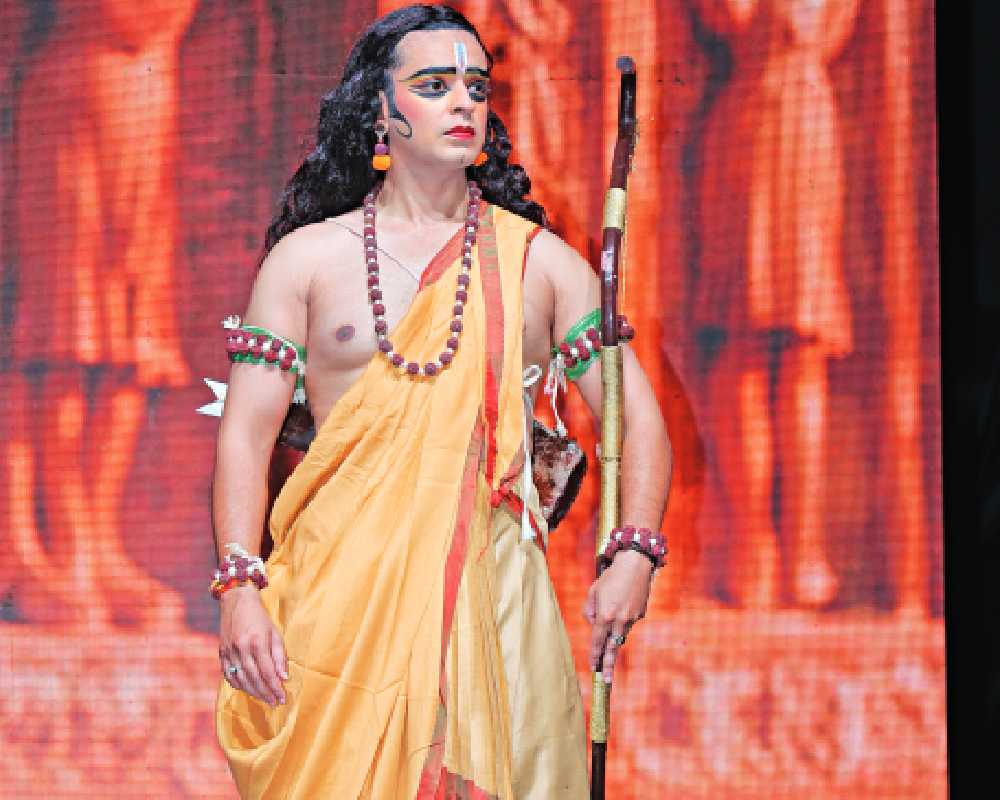
This year, Ram Leela across Delhi asked not what happens, but why: A Study of Characters. Across four stages — Chirag Delhi, Pritam Pura, and the twin stages at Lal Qila, audiences explored the choices, dilemmas, and inner worlds of the epic’s figures. Ram’s steadfastness, Sita’s grace, Kaikeyi’s fear, and Ahalya’s redemption reflected each spectator’s own questions, doubts, and virtues. But what makes a festival? The lights, the drums, or the gathering crowd? Or something quieter, a child stepping forward to see the stage, an elder smiling at a familiar scene, a flower in devotion? This is Navratri.
In these performances, Ram Leela held the city in quiet awe, blending story and fleeting moments of connection. In Chirag Delhi, the Shri Dharmik Ram Leela’s three-storey, 135-foot stage evoked Akshardham. From Ganesh Vandana to Ravana’s tyranny, children whispered questions, elders nodded, and friends remarked. Scenes of Ram and Sita’s births, and Tadaka and Maricha’s defeat, carried messages on protecting rivers, while claps and laughter gave the epic living weight.
PritamPura’s production, marking Broadway Ramlila’s 10th edition, approached the epic with grandeur and depth. Narration by Sourabh Raaj Jain and Samridhi Shukla guided three immersive hours of music, lighting, and 3D stagecraft, including twenty original compositions by Udit Narayan, Kailash Kher, and others. The towering stage became a character itself, yet the story came alive through human observation: parents explaining Ram’s bow to children, teenagers nudging friends, older viewers quietly watching Sita’s birth. Ahalya’s redemption resonated as a lesson in forgiveness, Kaikeyi’s inner conflict revealed human fear, and Ram’s adherence to dharma reflected leadership, while Ahalya’s return to grace offered urgent acceptance.
At Lal Qila, the Nav Shri Dharmik Leela Committee focused on early episodes: King Janak’s emissaries, Sita’s birth, and her first meeting with Ram. Tadaka Vad captured the crowd. Children held parents’ hands, diplomats leaned in, elders recalled past performances. The second Lal Qila production, by Luv Kush Ram Leela Committee, relied on theatricality. Manoj Tiwari as Parshuram entered with an axe, drawing applause, while the swayamvar and royal court scenes held weight through audience reactions. As nights closed and families went home, Ram’s story lingered in smiles, conversations, and laughter. Across all four stages, Ram Leela bridged generations, devotion, and everyday life. Take your children, let them see, hear, and feel the story behind Navratri, understand its meaning, and carry forward lessons of courage, honour, and compassion. On this Maha Saptami, may every home be filled with light and blessings.