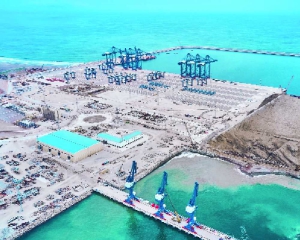
When we look at the marvels of modern construction — soaring skyscrapers, sprawling industries, intricate networks of highway and railway bridges and embankments, airports, and energy infrastructure — it is obvious to focus on the visible achievements.
Yet, beneath every asset we build, there lies an often complex and critical partner: the ground itself. The science, mechanics and behaviour of soils and geology profoundly shape what, where, and how we build.
Without a deep and artful understanding of the ground beneath us, even the most ambitious construction projects can falter, while those that respect the principles through science, technology and sound engineering stand the test of time. Every infrastructure development project, whether it is a bridge, a tunnel, a power plant, or a logistics hub, begins with a simple but fundamental question: what lies beneath? This question is far from simple. The nature of the soil and rock at a site determines not only the type of foundation required, but also the feasibility, cost, and long-term safety of the entire structure. In some locations, solid bedrock offers a stable base for heavy loads, while in others, weak or waterlogged soils demand sophisticated engineering solutions to prevent settlement or collapse. The assessment of terrain and stability is not just a matter of routine; it is the first and most vital step in any construction process.
Geology is also very important for finding risks and lowering them. The Earth is not a static entity; it is shaped by forces that can be both gradual and catastrophic. Earthquakes, landslides, subsidence, hydraulic flows, and flooding are all rooted in the geological history of a region. A thorough geological survey can reveal hidden faults, ancient landslide zones, or underground cavities that might otherwise go unnoticed until disaster strikes. By understanding these risks in advance, engineers can design resilient structures, incorporating features such as flexible foundations, retaining walls, or drainage systems to safeguard lives and investments.
The influence of geology extends beyond safety and stability; it also guides the selection of materials. The properties of local soils and rocks determine the suitability of aggregates for concrete, the durability of construction stone, and even the availability of groundwater for industrial use. In regions where high-quality materials are scarce, engineers may need to import resources from elsewhere, increasing costs and environmental impact. Conversely, a favourable geological setting can make a project more economical and sustainable. Engineering relies on a suite of advanced techniques to investigate the ground beneath our feet. Seismic surveys, movement monitoring, ground — penetrating radar, borehole sampling, and laboratory testing provide detailed information about subsurface conditions. This data is essential for designing safe and efficient structures. In some cases, engineers may need to stabilise soft soils with grouting or reinforcement or to divert groundwater to prevent flooding during excavation.
Urban environments present their unique geological challenges. Over centuries, cities accumulate layers of artificial ground — debris, ash, construction waste, and fill material that become part of the urban geology. This manufactured ground can be unpredictable, containing everything from old foundations to buried utilities and even archaeological remains. Building in these areas needs careful study and sometimes creative engineering to make sure everything stays safe and stable. In cities like Manchester or Rome, the legacy of past generations literally forms the ground on which new development must stand.
The relationship between geology and construction is not just technical; it is also deeply practical. Ignoring the lessons of geology can lead to costly mistakes, delays, or even catastrophic failures. There are countless examples, from buildings that have settled unevenly due to weak soils, to tunnels that have flooded because of unexpected groundwater, to roads that have been destroyed by landslides. Each of these failures underscores the importance of understanding the ground beneath us.
Geology also informs the responsible management of resources. Industries such as mining, oil and gas, and groundwater extraction depend on geological expertise to locate and extract resources efficiently and sustainably. Their work not only optimises yield but also helps protect the environment by minimising unnecessary disturbance and preventing contamination.
Amid climate change and rapid urbanisation, the significance of geology is becoming more critical than ever. Rising sea levels, more frequent extreme weather events, and expanding cities all place new demands on our understanding of the ground. Engineers and planners must work hand in hand with geologists to design infrastructure that can adapt to changing conditions, whether that means building on reclaimed land, stabilising slopes in hilly regions, or managing groundwater in drought-prone areas.
Ultimately, geology is the silent architect of industry. It shapes our cities, guides our resource extraction, and ensures the safety and sustainability of what we build. By respecting and understanding the ground beneath us, we lay the true foundation for progress — one that is resilient, responsible, and enduring. The next time you cross a bridge, enter a factory or travel a new highway, remember that it is the unseen ground beneath — studied and respected through the science of geology that truly supports our progress.
(The writer is the Managing Director at Geoquest India. Views expressed are personal)