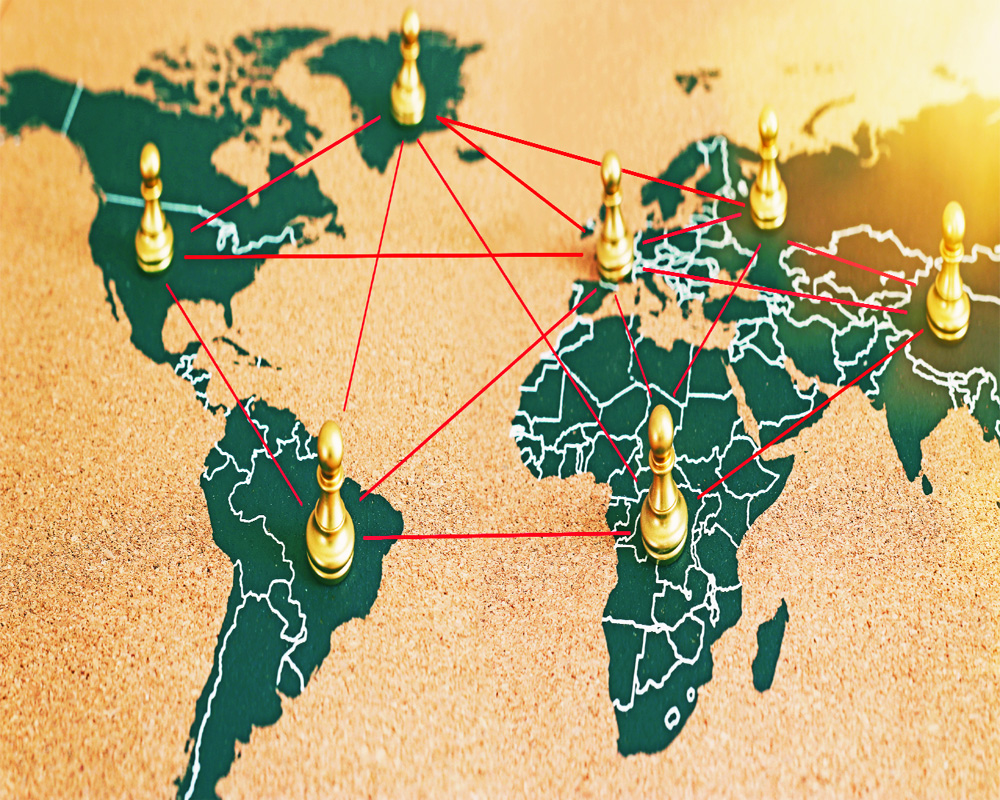
Global power today is not confined to weapons or borders — it revolves around stories, the shaping of narratives, and skilfully directing those perceptions to serve a nation’s long-term interests
When we talk about global power today, we rarely talk just about weapons or borders anymore, we talk about stories. We talk about who controls the narrative. That’s essentially what geostrategic communication is: Shaping how a country is perceived in the global mindspace, and making that perception work in its favour.
But this isn’t some new-age buzzword. Geopolitical communication has always been around, it’s just evolved with time. Earlier, it meant states issuing statements through newspapers or prime ministers addressing the nation on the radio. Think World War II-era propaganda, or Cold War shortwave radio stations like Voice of America and BBC World Service. Back then, it was all about control, one nation, one narrative, one channel. And honestly, it worked. Radio, in particular, was a game-changer. It crossed borders, bypassed censorship, and reached straight into homes. Even today, in certain conflict zones and remote regions, radio remains strangely relevant, mostly because it doesn’t need literacy, internet, or high bandwidth. But its influence is fading, because the world doesn’t just consume information anymore, we engage with it.
Before hashtags and trending reels, opinion-shaping often happened through editorials, opinion pieces, and specialised journals. These platforms still matter; they carry weight in policymaking circles, academic forums, and among readers who seek well-argued, data-backed positions rather than noise. In many ways, they act as slow-burning fires: not flashy, but capable of shaping long-term perceptions and influencing elite decision-making.
Today, geostrategic communication has become a unique matrix, a blend of old-school credibility and new-age immediacy. On one side, you have in-depth think-tank reports, policy briefs, and scholarly analyses; on the other, the rapid-fire social media blitzes that can alter global narratives in hours. Both coexist. Both influence. Enter the era of podcasts, YouTube diplomacy, Twitter handles run by embassies, and viral reels of leaders meeting citizens. Communication is no longer just press releases and speeches, it’s aesthetics, relatability, and digital fluency.
Podcasts, for example, offer depth, analysis, and storytelling in ways older mediums never could. But they assume a certain level of media literacy. If you can’t separate opinion from fact, or narrative from manipulation, they can mislead as easily as they inform. In much of the Global South, where digital literacy is still uneven, this remains a major barrier. The paradox is clear: newer mediums are more powerful, but not always more accessible. Unlike radio, which needed only a working device and a signal, digital media assumes stable internet, tech access, and the ability to process information in a cluttered, fast-paced environment.
The most visible weapon in today’s geostrategic communication arsenal is the social media blitz, carefully timed bursts of content designed to dominate feeds, trends, and headlines. Whether it’s the launch of a foreign policy initiative, disaster relief diplomacy, or cultural outreach, the aim is the same: saturate the conversation before competing narratives emerge.
But there’s a flip side, the menace of fake news. Disinformation spreads faster than fact-checks, and in geopolitics, even a few hours of false narratives can shift alliances, inflame tensions, or damage reputations. Once a misleading story gains traction, correcting it is like trying to pull ink out of water, it leaves stains. This makes good analysis non-negotiable. In the rush to be first, too many actors forget that being right is what sustains credibility.
Earlier, states used to talk at people. Now they’re expected to talk with them. Citizens are no longer passive recipients, they respond, critique, and shape public opinion. Governments can’t rely solely on official statements anymore; they must navigate Instagram stories, memes, influencer collaborations, and sometimes even humour to get the message across.
And it’s not just citizens watching, it’s the entire global audience. One misstep goes viral in minutes; one well-timed gesture can win soft power points overnight. International development partnerships, educational exchanges, even climate pledges are now framed and showcased as part of a country’s global story.
You can’t talk about influence today without talking about young people, technology, and culture. This trio is where narratives are created, contested, and amplified. But young people are also the most susceptible to online manipulation and polarised echo chambers.
That’s why media literacy, not just access, is essential. If we want the next generation to be global citizens who can navigate complexity, they must be trained to ask: Who is saying this? Why? What’s missing? And what evidence supports it?
Soft power, whether through cultural exports, academic exchanges, or diplomatic presence, is no longer a “nice-to-have”. It’s an active pillar of strategic influence. The real edge lies in telling a national story that resonates across borders while remaining authentic at home.
Countries, especially in the Global South, must invest in strategic communication capacity alongside infrastructure. This means training diplomats, bureaucrats, and youth in influence-based communication, embedding communication and media literacy modules into education systems, strengthening credible platforms for fact-based analysis, encouraging local storytellers to shape global narratives, and using technology to amplify, not distort, national interests.
Geostrategic communication is storytelling with intent. It must evolve with its audience, whether through a dusty transistor in rural Bihar or a trending Instagram reel in Mumbai. In the race for influence, the winners will be those who can blend credibility with agility, depth with reach.
Because today, power isn’t only about armies or GDP, it’s about who can frame reality, make it stick, and defend it from distortion. And if we’re smart, we’ll train the next generation not just to consume information, but to challenge it. Because the wars of tomorrow may not be fought on borders, they’ll be fought in browsers.
The writer is a former civil servant. Inputs by Zoya Ahmad and Vaishnavie Srinivasan