With widespread flight disruptions pushing up ticket prices on several domestic routes, the Centre on Saturday capped airfares in the range of Rs7,500 to Rs18,000, depending on the distance, amid soaring air ticket prices due to the IndiGo flight disruptions.
Invoking its regulatory powers to ensure fair and reasonable fares across all affected routes, the Ministry of Civil Aviation issued a fare-cap order and directed all airlines to strictly adhere to it.
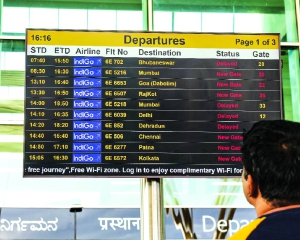
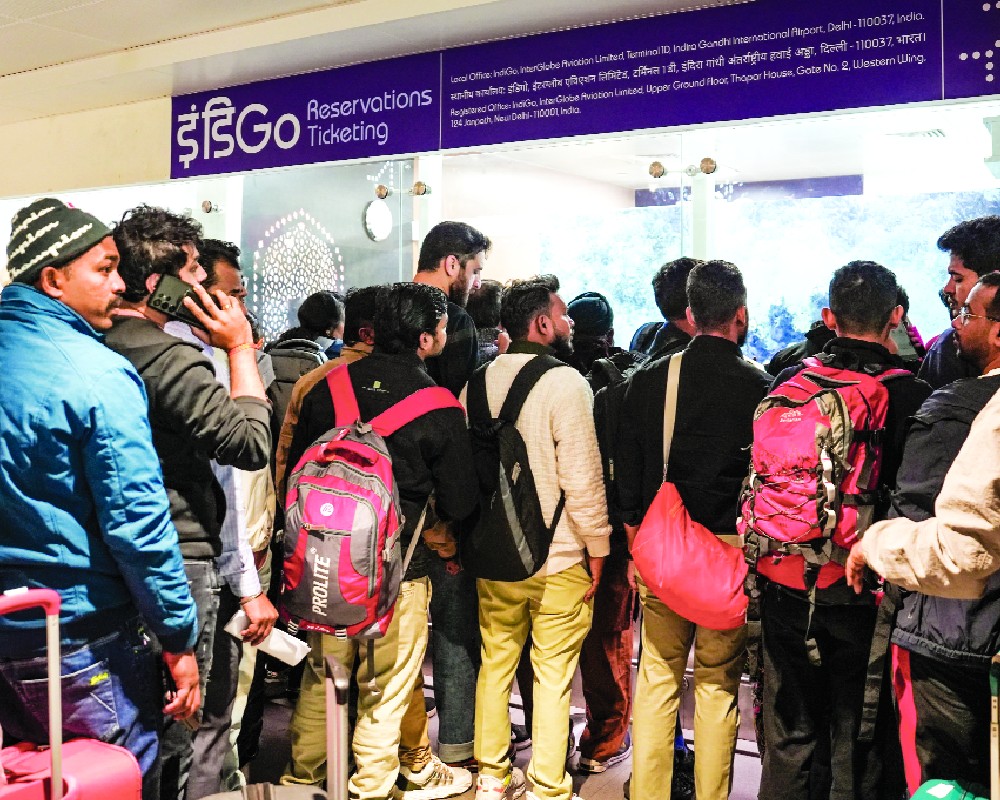
As the IndiGo mess and chaos across the airports entered its fifth consecutive day on Saturday, leaving thousands of flyers high and dry, the ministry also directed the airline to complete the ticket refund process for the cancelled flights by Sunday evening, as well as ensure baggage separated from the travellers is delivered in the next two days.
The refund process for all cancelled or disrupted flights must be completed by 8 pm on Sunday, the ministry said in a statement. On Saturday, more than 800 flights were cancelled at various airports.
Under the limits, for a flight flying up to 500 kilometres, the fares are capped at Rs7,500, and for 500-1,000 kilometres, the ticket price cap is Rs12,000. For flights operating 1,000-1,500 kilometres, the fares are limited at Rs15,000 and for flights above 1,500 kilometres, the cap is Rs18,000. These limits apply uniformly across all airlines and booking platforms. The ministry clarified that these limits exclude applicable UDF, PSF and taxes, and will not apply to Business Class or RCS-UDAN flights.
The cap means that for a Delhi-Mumbai flight, which is covered in a distance of over 1,300 kilometres, the fare for at least the economy class is capped at Rs18,000.
The ministry’s move comes at a time when passengers across the country have been reporting skyrocketing last-minute fares, in some cases crossing Rs25,000 and up to Rs80,000 on popular metro routes. With the holiday and wedding travel season ramping up, officials said stabilising the market had become an urgent necessity.
The last time the Government-imposed fare caps was in May 2020, when a limited number of flights were allowed to resume following a two-month ban during lockdown measures. The caps were different price slabs based on flight distance.
Thousands of passengers who had IndiGo’s tickets for travel now started cancelling flights and buying on other airlines like Air India, AI Express, Akasa and SpiceJet at sky-high fares.
An analysis of fares on airlines’ websites on Friday showed that a one-way one-stop economy-class SpiceJet Kolkata-Mumbai flight ticket for December 6 costs up to Rs90,000, and a similar ticket of Air India for Mumbai-Bhubaneswar costs up to Rs84,485. The prices from Delhi to Mumbai shot up to Rs80,000. Tickets that normally cost Rs5,000-Rs8,000 suddenly shot up to Rs30,000-Rs82,000, leaving passengers shocked and stranded.
In order no 01/2025, the ministry said the disruptions had led to severe capacity constraints and “unreasonable surge” in fares on multiple sectors, prompting intervention in the public interest. The government has now imposed temporary maximum fare limits for all scheduled domestic flights. In an official statement, the ministry said, “The objective of this directive is to maintain pricing discipline in the market, prevent any exploitation of passengers in distress, and ensure that citizens who urgently need to travel, including senior citizens, students, and patients, are not subjected to financial hardship during this period.
The order further mandates that the fare caps apply uniformly across all booking platforms, whether tickets are purchased through airline websites or online travel agents. Airlines have also been instructed to ensure consistent availability of tickets across fare buckets and to consider adding capacity on routes witnessing unusually high demand.
The fare restrictions will remain in force until prices stabilise or until the Government issues a further review. The objective of this directive is to maintain pricing discipline in the market, prevent any exploitation of passengers in distress, and ensure that citizens who urgently need to travel - including senior citizens, students, and patients - are not subjected to financial hardship during this period.”
The ministry added that it would “continue to closely monitor fare levels through real-time data and active coordination with airlines and online travel platforms. Any deviation from the prescribed norms will attract immediate corrective action in the larger public interest.”
In a statement, the ministry also directed the airline to complete the ticket refund process for the cancelled flights by Sunday evening, as well as ensure baggage separated from the travellers is delivered in the next two days. The refund process for all cancelled or disrupted flights must be completed by 8 pm on Sunday, the ministry said in a statement. “Airlines have also been instructed not to levy any rescheduling charges for passengers whose travel plans were affected by cancellations,” it said.
The current crisis was primarily caused by a shortage of pilots that was not anticipated due to planning deficiencies, and the authorities are keeping a close watch on the situation.
Scenes of absolute chaos have unfolded at airports across the country as IndiGo’s domestic fliers expressed frustration with their flights being delayed or cancelled.