










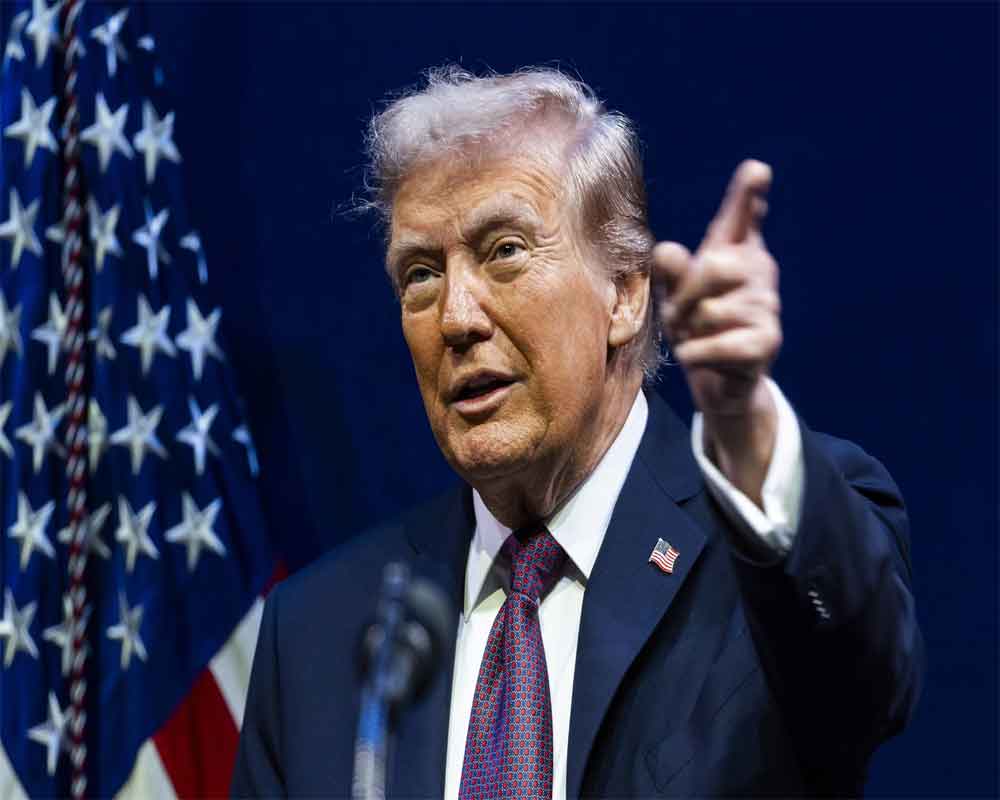
In a bold and controversial move, US President Donald Trump has urged the European Union (EU) to impose up to 100 per cent tariffs on India and China, aiming to intensify global economic pressure on Russia over its ongoing invasion of Ukraine. During a high-level meeting in Washington, senior US and EU officials discussed strategies to raise the economic cost for Moscow.
According to unnamed US officials, Trump personally dialled into the meeting and insisted on joint tariff action, arguing that India and China’s continued economic ties with Russia, particularly through oil trade, were undermining Western sanctions. A US official stated that Washington is prepared to “mirror” any EU-imposed tariffs on India and China.
At the heart of Trump’s frustration is India’s surging import of discounted Russian crude oil, a trade New Delhi defends as driven by national interest and market dynamics. Since the start of the Ukraine war in 2022, Russia has become India’s largest oil supplier.
The call for joint tariffs follows Trump’s earlier move to double tariffs on Indian goods to 50 per cent, including a 25 per cent surcharge directly tied to India’s Russian oil purchases. India strongly criticised the measure, calling it “unfair, unjustified and unreasonable.”
Despite these rising tensions, signs of diplomatic thaw have emerged in recent days. Trump and Indian Prime Minister Narendra Modi exchanged positive messages on social media, indicating efforts to stabilise the strained relationship.
In a post on Truth Social, Trump said, “I look forward to speaking with my very good friend, Prime Minister Modi… I feel certain there will be no difficulty in coming to a successful conclusion.” Modi responded warmly on X (formerly Twitter), stating, “India and the US are close friends and natural partners... I am also looking forward to speaking with President Trump.”
However, not all voices within the Trump administration are aligned with this optimism. White House Trade Advisor Peter Navarro recently made scathing remarks about India’s trade practices and its ongoing oil ties with Russia. Navarro accused India of desperately seeking access to US markets while continuing to “undermine” sanctions by purchasing Russian crude.
Amid these developments, Trump also held a rare summit with Russian President Vladimir Putin in Alaska, adding another layer of complexity to US foreign policy and prompting questions about his broader approach to the Ukraine conflict.
Still, Trump has attempted to strike a balancing tone in public. In a recent interview, he said, “India and the United States have a special relationship. There’s nothing to worry about. We just have moments on occasion.”
In another post, he voiced concern over India’s growing proximity to China and Russia, sharing an old image of Modi with Putin and Xi Jinping at a Shanghai Cooperation Organisation (SCO) summit in Tianjin. The image went viral, sparking debate on shifting alliances.
Yet, despite high tariffs, harsh rhetoric, and oil-driven tensions, both nations appear committed to recalibrating their strategic partnership, acknowledging the mutual economic and geopolitical value of a stable India-US relationship.







