In 2023, I had the rare opportunity to visit one of the most geopolitically sensitive locations in South Asia — Chabahar Port in Iran. This trip coincided with a pivotal moment, the global community quietly but decisively turning its attention back to this strategic maritime asset, especially in light of the revocation of the US sanctions waiver that once safeguarded India’s operations here.
The waiver, originally granted in 2018, allowed India to operate the Shahid Beheshti Terminal at Chabahar through India Ports Global Limited (IPGL) without facing sanctions under the Iran Freedom and Counter-Proliferation Act (IFCA). Its revocation — effective September 29, 2025 - threatens to derail India’s $120 million investment and exposes Indian operators to the risk of secondary sanctions.
But geopolitics is one thing. Experiencing Chabahar firsthand — its stark terrain, strategic isolation, and silent ambition — is something else entirely.
A Journey Back in Time
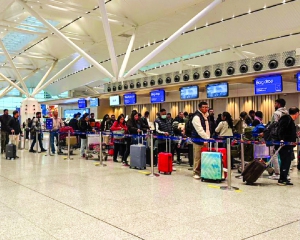
Landing at Chabahar Airport on a small Chabahar Airlines flight immediately transported me back to an India I remember from the early ‘90s. The airport - a modest, single-terminal facility — evoked memories of India’s state-run Airports Authority of India (AAI) days: minimal infrastructure, subdued activity, and a functional, no-frills environment.
There were no digital displays, no bustling shops, and barely any passenger movement. Just quiet corridors and a few officials who examined our documents with both caution and curiosity. Under the watchful gaze of Iranian airport security, I stepped into a region determined to define its future on its own terms.
The Road to the Port - Silence, Sand, and Strategy
From the airport, our group boarded a bus and drove towards the port. The landscape was surreal — vast stretches of uninhabited land, dotted with sand dunes. There were no high-rises, no residential buildings, no traffic. For someone like me, born and raised in Delhi, the silence was both strange and captivating.
There was hardly any infrastructure to speak of — no schools, no hotels, no signs of active urban life. It felt like a land waiting to awaken. And indeed, that is what the Chabahar Free Zone Authority is counting on. They are actively courting Indian oil companies, infrastructure developers, and investors to help build what they hope will one day become a thriving economic hub, perhaps even a “new Dubai” - albeit with strategic intent.
On the Ground Where India Meets Iran
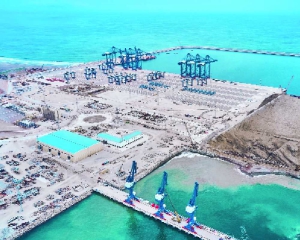
When we finally arrived at the Chabahar Port complex, the atmosphere changed. The port was alive — modestly, but purposefully.
A large vessel named DELRUBA was being loaded with cargo. Behind it, India’s presence was unmistakable. The Shahid Beheshti Terminal, operated by India, showed clear signs of activity. Massive cranes, cargo-handling equipment, and other machinery — many bearing Indian markings — lined the dock. I managed to take several photographs — one showing the DELRUBA mid-loading — which I have kept until now. Today seems the right time to share them, as India’s place in Chabahar becomes part of a larger strategic conversation.
On-site, I met Mr Sa Hashemi, a senior port officer, who confirmed the scale and scope of India’s involvement.
“Yes, the Indian company is investing heavily here. They operate a portion of the port, not all of it — this is a shared development. But the Indian side is working very hard to modernise operations,” Hashemi told me.
He further explained that the port’s -16-metre depth allows it to accommodate ships up to 120,000 DWT (deadweight tonnage). Chabahar can host a wide range of vessels, from passenger ferries to 6,000-TEU container ships. “We have no limitations. The infrastructure is ready,” he said proudly.
Chabahar Free Zone’s Vision
Next to the port lies the Chabahar Free Zone - a region poised to become a hub for trade and logistics. But currently, vision far outpaces reality. There is still no housing, no schools, no hospitals, no hotels - no real urban infrastructure. But the ambition is visible. The Free Zone team shared a surprising plan with me: a proposal to collaborate with the Board of Control for Cricket in India (BCCI) to build a cricket stadium in Chabahar.
“We want to form a local team and have India’s help in training them. It will be a symbol of cultural connection between our countries,” one Free Zone official told me.
While still in the realm of diplomatic possibility, the idea reflects Chabahar’s desire not just to exist, but to belong on the global map — not only as a port, but as a place to live, work, and dream.
A Cultural Encounter at Darya Bozorg Beach
After our visit to the port, we returned to our hotel, located not far from the facility. That evening, a few of us - including media colleagues — headed to Darya Bozorg Beach to unwind.
As we relaxed by the water, a local man approached me and asked, “Are you from Indu?” I smiled and replied, “No, from Hindustan.” Curious, I asked him how he recognised me. He pointed to the red-and-yellow thread tied around my wrist. “Because of your Rakhi,” he said. I gently corrected him with a smile: “This is called Kalawa.” That brief exchange reminded me that even in distant places, culture travels with you.
Strategic Crossroads - The Gwadar Factor
Just 170 kilometres from Chabahar lies Gwadar Port, China’s strategic jewel in Pakistan, and a critical part of the China-Pakistan Economic Corridor (CPEC). This proximity makes Chabahar vital for India as a counterbalance to China’s influence in the Indian Ocean region. India sees Chabahar as a way to bypass Pakistan and establish direct trade access to Afghanistan and Central Asia. It is also a key link in the International North-South Transport Corridor (INSTC), connecting Mumbai to Moscow via Tehran and Baku. However, with the US waiver revoked, this strategy now faces a serious challenge.
A Port Caught Between Powers
My journey to Chabahar in 2023 was more than just a reporting assignment — it was a front-row seat to a dynamic, unfolding chapter in India’s regional diplomacy. Chabahar is not just a port. It is a geopolitical chessboard, where India, Iran, the United States, China, and Russia are all manoeuvring for influence.
India’s footprint is visible. Its ambition, clear. But whether this foothold can withstand rising sanctions pressure and shifting global alliances is still uncertain. What I saw was both inspiring and unsettling. Chabahar is a story of potential, perched precariously on the edge of international turbulence. As the September 2025 deadline looms, one question remains: Will India double down — or be forced to draw back?
(This article is based on Ashoke Raj’s 2023 field reporting from Chabahar Port, Iran, and draws on firsthand observations, interviews, and official briefings. All photographs and interviews were conducted with appropriate permissions and local cooperation. The content is protected under the author’s copyright. Ashoke Raj is Associate Editor (Foreign Affairs) and a consultant with The Pioneer. He has reported from over 30 countries)