The state of Karnataka derives its name from ‘Karunadu’ — this name reflects the state’s geographical position on the Deccan Plateau, which is a large, elevated area of land. The prehistoric period of Karnataka spans from early Stone Age cultures to the Iron Age, characterised by the evolution of tool technology, the arrival of agriculture, and the development of megalithic burial sites. Key stages include the Palaeolithic period (Middle Paleolithic — 300,000-30,000 years ago) and Upper Paleolithic (50,000- 10,000 years ago) marked by stone tools like hand axes. This period shows a shift to bone tools, parallel — sided blades, points, and barbs — with important sites like Salvadagi, Maralabavi, and others in the Malaprabha Valley. The journey continues with the Mesolithic era, which introduced microliths and increased settlement, the Neolithic Age, beginning with farming communities around 3000 BCE, and the Iron Age, which saw iron-using settlers, complex megalithic structures, and the growth of trade networks before the advent of historical kingdoms like the Chalukyas. The epic ‘Mahabharata’ mentions this area as ‘Karnata Desha’, and historically the region was also known by other names such as ‘Kuntala Rajya’. The ‘Talagunda’ inscription from the 5th century CE, among other records, describes the region of what is now Karnataka, particularly the area around Balligavi, as part of the ancient Kuntala country, which was known for its developing culture and administration from the 10th to 12th centuries CE.
The Mauryan Empire (321 BCE-185 BCE), under Chandragupta Maurya, extended into Southern India, including the region that is now Karnataka, where he spent his last days as a Jain ascetic in Shravanbelgola. In the centuries to follow, Karnataka was ruled by dynasties like the Chalukyas of Badami, Rashtrakutas, Hoysalas and the Vijayanagara Empire. In the 17th and 18th centuries, the Maratha Empire gained control over much of the northern parts of present-day Karnataka. As Maratha power waned in the late 18th century, the Kingdom of Mysore began to expand its territory in Southern Karnataka, and following the Anglo-Mysore Wars, the East India Company defeated the forces of Tipu Sultan, leading to Company Rule in India. Finally, the modern state of Karnataka was formed with the passage of the States Reorganisation Act in 1956, originally as Mysore State, and was later renamed Karnataka in 1973.
Like other states of India that include Gujarat, Maharashtra, Madhya Pradesh, Bihar and many more — Karnataka too offers multiple cuisines from within the state. These are complete and wholesome food offerings that elevate the gastronomic experiences by many notches- treating the taste buds with an absolutely delicious and lingering flavour. The sub-cuisines of Karnataka are broadly categorised by its distinct regions, it includes the ‘Udupi’ cuisine, known for its vegetarian dishes and use of coconut and tamarind, the ‘North Karnataka’ cuisine, characterized by its hearty dishes, often featuring spicy and pungent flavours that are attributed to the wide use of chillies (both green and red). Other notable regional styles include the ‘Mangalorean’ cuisine of the coastal regions, famous for its seafood and other non-vegetarian preparations, and the regal ‘Mysore’ cuisine from the south, renowned for sweet delicacies like ‘Mysore Pak’.
In this article I will take up the Udupi and Mangalorean cuisine that are together a part of ‘Tuluva’ cuisine. The region encompassing both cities is known as ‘Tulunad’, where Tuluva cuisine is deeply rooted in local traditions and ingredients, encompassing both the vegetarian dishes of Udupi, and the diverse, often meat-based preparations of Mangalore. Udupi cuisine’s origin is deeply intertwined with the Sri Krishna Matha temple, which was founded by Madhvacharya in the 13th century. The cuisine developed as a form of temple cuisine, characterized by sattvic (pure) vegetarian food that was offered to the deity and served to devotees. This tradition of feeding large numbers of people with high-quality, vegetarian food with no onion or garlic helped establish the distinct characteristics of Udupi cuisine. Omission of these otherwise ubiquitous ingredients, has led to innovative ways to create flavourful dishes, incorporating elements like mustard, local brinjals (Mattu Gulla), and other gourds. ‘Mattu Gulla’, also known as Udupi Gulla, is an heirloom variety native to the coastal area of Udupi, specifically Mattu village. It holds a Geographical Indication (GI) tag, which protects its authenticity and ensures it’s a true Udupi product. The cuisine is rooted in the Vedic principles followed at the temples, which include culinary exclusions for religious and spiritual reasons. It predominantly uses rice, coconut, tamarind, and spices like mustard seeds, curry leaves, coriander, cumin and dried red chillies. Coconut, in particular, plays an important role in many Udupi dishes- it can be grated, blended into chutneys, or used to thicken gravies.
Let me take the readers to the dishes of the Udupi region. ‘Kaddubu’ or ‘Moode’ can be described as cylindrical idlis (steamed rice cakes) that are steamed in jackfruit, banana, turmeric, teak or pandan leaves. The leaves give the dish a distinctive taste and aroma, and it involves a unique art to make the Kaddubu mold out of these leaves. Moode often finds itself on the menu during festive celebrations and breakfasts for special occasions. They may be served with curries, chutneys and a drizzle of ghee on top. ‘Puliogare’ or tamarind rice, is a tangy rice dish seasoned with tamarind, coconut, and a wide range of ingredients like coriander seeds, fenugreek seeds, black peppercorns, cumin seeds, and red chillies. All these are often complemented by asafoetida (hing) and curry leaves. Other common ingredients include sesame seeds, mustard seeds, chana dal, urad dal, and dried coconut (copra), which are roasted and ground to make the flavourful spice blend. The regions varied taste offerings come to the fore with ‘Alasande Gasi’ — a traditional coconut-based gravy made with black-eyed peas (alasande) popular in the Udupi-Mangalore region of coastal Karnataka. It’s known for its simple preparation, featuring a thick sauce with a few spices like coriander, cumin and red chillies — pairing well with rice or chapati.
The much loved ‘Kosambari’ comes next, it is a classic dish of Udupi cuisine, and a staple in the Karnataka region, often served as part of a traditional feast (Sadhya) and offered as temple prasad. It’s a nutritious and refreshing salad made from soaked lentils (like moong dal or chana dal), raw vegetables such as cucumber, and seasoned with fresh coconut, mustard seeds, green chilies, and curry leaves. The omnipresent southern dish- ‘Dosa’, gets a delightful regional twist through the ‘Neer Dosa’. The name “Neer” translates to “water” in the local language, referring to the batter’s thin, watery consistency and the light, papery texture of the resulting dosa. It is traditionally served with coconut chutney, curries, or other vegetable preparations. ‘Bisi Bele Bath’ or lentil rice has many variations in south India, it’s the Udupi cuisine’s infusions that make it an absolute favourite in the region. Its taste takes a turn towards the sublime with the ‘Special Udupi spice blend’, comprising cloves, cinnamon, and cardamom, coriander, cumin, black pepper, and other ingredients like star anise or fennel seeds. These spices provide a distinctive warm and aromatic flavour to various dishes- making for a most unique aromatic and flavourful experience. Additionally, Ghee’s lavish drizzle on top amplifies the flavours, making each spoonful melt-in-mouth delicious. One of the most iconic dishes that is made using the Udupi spice mix is the ‘Udupi Sambar’ which distinguishes itself from other sambars with its delicate sweetness, delectably balancing the spices and incorporating the richness of coconut. Any description of the Udupi cuisine remains incomplete without mentioning the legendary ‘Udupi Uppittu’, or ‘Rava Upma’. It is made using Rava (Semolina), and is a classic and authentic dish from the Udupi region. It is a popular breakfast staple in South Indian households and restaurants. Its distinct Udupi essence comes from the use of coconut, coastal influences, and a balance of sweet, salty, tangy, and spicy flavours- resulting in a delightful experience, and a comforting start to the day.
A perfect representation of the region’s sweet dishes is found in ‘Kashi Halwa’- it’s main ingredients are grated ash gourd (also known as white pumpkin or petha), sugar, ghee, cardamom powder, and nuts like cashews. It is frequently prepared for special celebrations and feasts, making it a prominent part of Udupi’s celebratory dishes. Balance of nutrition and taste is exhibited by ‘Pelakai da Gatti’ — a well-known and classic traditional dish. It is a seasonal steamed cake, made from ripe jackfruit, raw rice, coconut, and jaggery — typically wrapped and steamed in teak leaves, which impart a distinct aroma, colour, and medicinal properties to the dish.
Now to the equally famous and venerated Mangalorean cuisine. It has shades of Portuguese and Arab influence reflected through dishes like Sorpotel, Bafat, Mutton Biryani, and much more. Early Arab traders and travellers, particularly around the 7th century CE, established strong trade links and intermarried with the local population in the Tulunadu region (which includes Mangalore).
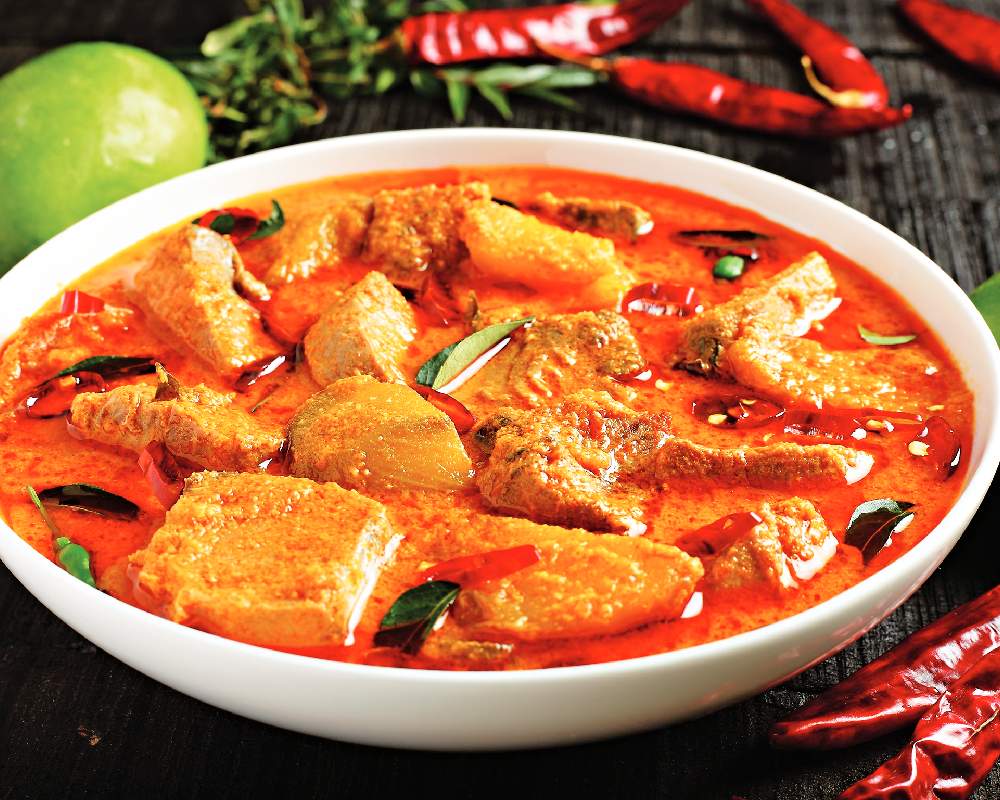
The classic and traditional Mangalorean cuisine, while more inclined towards non-vegetarian food — also offers some stellar vegetarian options. The much loved ‘Anjal Fry’ (King Fish Fry) and ‘Kane Fry’ (Lady Fish Fry) are both classic and beloved fish dishes from Mangalore, characterised by their fiery red, spicy, and tangy masalas that are pan-fried with fresh fish. Anjal refers to the Kingfish or Seer fish, while Kane refers to the Ladyfish, which is known for its small size and distinctive preparation. Coconut oil and curry leaves are often signature ingredients in Mangalorean fish fry recipes — contributing to the unique taste and aroma. Another exquisite dish with fish as its star element is ‘Bangude Pulimunchi’ (Mackeral fish curry) — a classic and traditional coastal dish from the Mangalore region of India, famous for its spicy and tangy flavours. The name “Pulimunchi” comes from the Tulu language, where “puli” means tamarind (for sourness) and “munchi” means chili (for spiciness). It features mackerel fish (bangude) simmered in a thick, flavourful gravy made with tamarind, red chilies, spices, and other aromatics. ‘Chicken Sukka’, also known as ‘Kori Sukka’, is a classic and authentic dish originating from the Mangalore-Udupi region of Karnataka. This popular dry or semi-dry chicken preparation is characterized by its use of roasted whole spices like turmeric, fennel seeds, aromatics like ginger and garlic, and roasted coconut — making for a signature dish of the area. I must also mention another smashing dish from the region, the Mangalorean ‘Chicken Ghee Roast’ — a renowned signature dish of Mangalorean and Tuluva cuisine with origins in Kundapur. It’s known for its fiery, aromatic, and spicy-tangy flavour profile, achieved by slow-roasting chicken in copious amounts of ghee and a blend of toasted spices, tamarind, and jaggery. A supremely flavourful dish is ‘Crab Sukka’ or ‘Kurli Sukka’- a traditional coastal delicacy known for its spicy, coconut-based, and dry preparation that balances tangy tamarind and rich spices with fresh crab meat. It is a popular specialty in the region and is commonly enjoyed with steamed rice or neer dosa. Another popular dish is ‘Kori Rotti’ — it is a distinct dish of this area, famous for its unique combination of a spicy, coconut-based chicken curry (kori gassi) served with extremely thin, crisp rice wafers (rotti). The name itself comes from the Tulu words “kori” (chicken) and “rotti” (rice wafer), highlighting its regional roots. Finally, the amazing mutton dish of the area that makes for a mouth-watering experience — the ‘Mutton Sukka’ also called ‘Ajadina Maasa’. It is characterised by its dry, spicy preparation with coconut and roasted spices. The fragrant spice blend includes dry red chilies, coriander seeds, cumin seeds, black peppercorns, cloves, and cinnamon. Common additions like turmeric powder, fresh ginger, garlic, and mustard seeds provide earthy and pungent flavours. The dish is often finished with fennel seeds for aroma and freshly grated coconut for texture.
Let us now turn our attention towards a local gastronomic delight — the ‘Mangalore buns’. It originated in the Udupi-Mangalore region, and were likely created by cooks trying to use overripe bananas. It ended up becoming a popular dish in local kitchens and restaurants. These sweet, deep-fried buns, made with mashed banana, all-purpose flour, and sugar, are now a staple of the region’s cuisine. This dish is loved for its mildly sweet and cumin flavours — popular as a breakfast or tea-time bread. A dish with deep historical ties is ‘Goli Baje’ also called ‘Mangalore Bonda’ (named after the place from where it originated). It is a popular deep-fried snack from Coastal Karnataka, characterised by its crispy exterior and soft, fluffy interior. It is a staple in the Udupi and Mangalore restaurants — best enjoyed hot, with a side of coconut chutney.
Like all cuisines, there is a special place accorded in the Mangalorean cuisine for the sweet taste. Three dishes stand out in this aspect, the first being ‘Manni’ — a rice pudding or halwa that is incredibly soft and delicate, often described as melting in the mouth. It’s made from rice cooked slowly with coconut milk, jaggery, and flavoured with cardamom powder and nuts. The preparation requires significant time and patience, making it a truly traditional and cherished dessert. The second is ‘Chiroti’ — a deep-fried, flaky pastry made from layers of thin dough. It is a popular traditional dessert served on special occasions and festivals in this region, and other parts of Karnataka. It is often sprinkled with powdered sugar or dipped in sugar syrup, and can be served with flavoured almond milk. Last but not the least, there is the ‘Payasam’ — a traditional dessert, often made with moong dal or chana dal, jaggery, coconut milk along with ghee, nuts, and cardamom for flavour and texture. It is a must-have on occasions like Ganesh Chaturthi and many other celebratory occasions.
With this sort of food gamut — Karnataka cuisine is indeed a flavour delight, one that takes the taste buds on an unforgettable journey. It actually spoils us with its choices, and makes it almost impossible to resist the flavoursome variety that can satisfy the most demanding palate. I believe our children and youth have to take the lead — in both exploring the wide variety of the food, as well as in sensitizing their generation about the nutritional balance, unique taste and unmatched variety that the cuisine offers. It will be a key factor that will ensure greater inclusion of regional dishes in their food choices, and strengthening of this wonderful legacy that we have inherited.
It is our collective responsibility that going forward, we not only sustain this heritage, but strengthen it — becoming impactful storytellers in the years and decades to follow. After all we are only stating the facts!