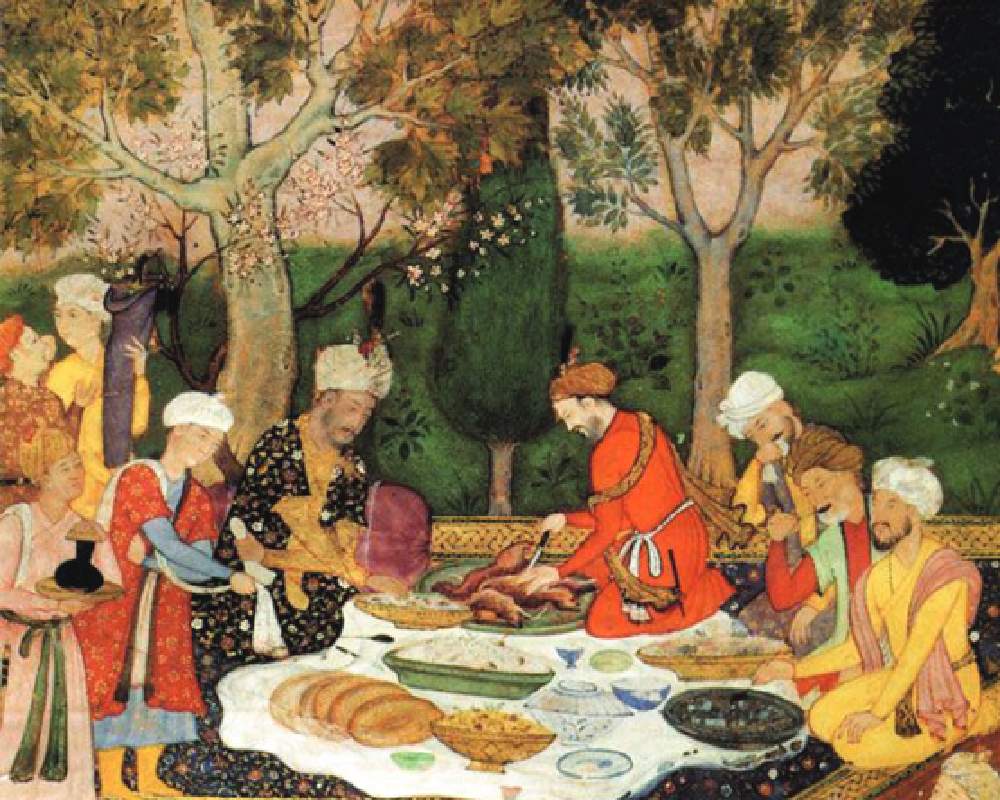
Babur is often and incorrectly remembered as the "founder of the Mughal Empire," yet his own writings reveal a far more complex and contested legacy. Aabhas Maldahiyar’s second book continues to unveil this legacy from where his earlier book, Babur: The Chessboard King, left off. Maldahiyar now turns to Babur’s campaigns in Hindustan.
The book Babur: The Quest for Hindustan is both history and intervention, as it seeks to dismantle myths, expose distortions, and reground the debate in primary sources. This book draws a contrast between Babur the poet, exile, and dreamer of Farghana (seen in earlier life) versus Babur the Ghazi and conqueror who embraces jihad as a political and religious identity once he turns towards Hindustan.
Aabhas relies heavily on his own translation of the Baburnama (Persian version), while also drawing on chronicles like Gulbadan Begum’s Humayun-nama and Haidar Mirza’s Tarikh-i-Rashidi to cut through colonial and Marxist history by foregrounding primary texts. His vivid reconstruction of Babur’s Afghan, Qandahar, and Hindustan campaigns, with attention to the sieges, alliances, betrayals, and the decisive battles of Panipat and Khanwa, uses multiple sources to compare conflicting accounts. The book challenges some controversial assumptions about Rana Sanga inviting Babur, instead presenting the nuances of alliance, betrayal, and shifting calculations of Rajput politics.
A major portion of the book dissects whether Babur really demolished the Ram Mandir or built the Babri Masjid. His detailed examination of inscriptions at Babri Masjid and other sites, which may have been later fabricated or repurposed to legitimise claims, positions both the Hindu and Muslim sides as shaping narratives for their own purposes. Aabhas highlights the silences in the Baburnama. He points out inconsistencies in inscriptions, later interpolations, and lack of early references to the mosque, suggesting that Aurangzeb, not Babur, may have been responsible for the demolition, thereby shifting the frame of a long-contested issue.
Babur: The Quest for Hindustan positions itself against both nationalist simplifications and secular-left dismissals, aiming to "reclaim" history by confronting painful truths without ideological filters. Maldahiyar’s book highlights how India should re-examine its medieval history in view of the current debates on Ayodhya and temple-mosque disputes. The book is not just about Babur but about correcting narratives that shaped modern politics.
(A senior publishing professional, Lipika Bhushan is the host of TheIndicPen podcast and founder of MarketMyBook. She tweets @LipikaB)