The airspace of war-torn Yemen was briefly closed Monday, an official said, as tensions escalated in the country’s south after a separatist group, backed by the United Arab Emirates, took over of an oil-rich region in a rift that could fracture the anti-Houthi alliance.
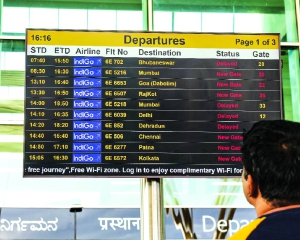
A Yemeni government official said that the Saudi-led coalition didn’t issue required permissions for flights to or from Yemen, briefly halting flights to and from the southern city of Aden — the seat of the internationally recognized government.
The official described the move as a “Saudi message” to the separatist Southern Transitional Council’s latest clashes across southern Yemen, including its seizure of much of the sprawling oil-rich province of Hadhramaut, which borders Saudi Arabia.
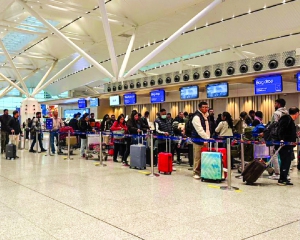
The move was later reversed, allowing flight operations in Aden airport, where hundreds of passengers were stranded for hours, said the official, who spoke on condition of anonymity because he wasn’t authorised to brief the media.
An Associated Press journalist at the airport said workers have begun processing passengers of a Cairo-bound flight that was supposed to take off early Monday. Since the entry of a Saudi-led coalition into Yemen’s war in 2015, the coalition has controlled the country’s airspace. Saudi Arabia didn’t acknowledge closing Yemen’s airspace on Monday.
The Southern Transitional Council (STC) — an umbrella of armed groups trained and financed by the UAE — has expanded its control over Yemen’s south earlier this month. They seized control of Seiyun in Hadhramaut, including crucial oil fields and energy installations following brief clashes with the Yemeni military, and allied tribes.
Forces of the secessionist group were deployed across the strategic Wadi Hadramout area, which includes major urban centres and military bases, according to STC-allied media. They took over the presidential palace and the international airport in Seiyun last week, and advanced to the province of Mahra, which borders Oman, the group said.
STC hoisted the flag of South Yemen over government buildings across the country’s south including on the border crossing with Oman. Images circulated on STC-allied media showed the South Yemen flag, with its light blue chevron and a red star, flying over government buildings and schools in the south.
The separatists enjoy loyalty through much of southern Yemen and have repeatedly pushed to break up Yemen into two countries, as it was between 1967 and 1990. Hundreds of STC supporters took to the streets in Aden to call for the establishment of an independent state in the south. The demonstrators raised the flag of South Yemen, and pictures of Aidarous al-Zubaidi, the STC leader, who is also vice president of the country.