The PM is known for ambitious decisions. This book tells why he is the right person to raise India’s international stature, writes INDU PANDEY
The Narendra Modi Government has completed two years of its tenure. This book by Sreeram Chaulia covers all that we need to know about the current Government’s foreign policy. This book holds its importance because of the Modi factor. Modi is a leader known for bold and ambitious decisions. The book tells why he is the right person to raise India’s international stature to a great power.
The book claims neither to be an account of Indian foreign policy nor a biography of Modi. It’s a work on his foreign policy and his vision in international affairs. The book justifies its title by highlighting the importance of India’s foreign policy through an opinion poll carried out by a popular magazine that marked 22 percent of Indian respondents rating ‘Foreign Policy successes’ as the biggest achievement of Modi’s Government.”
Chaulia explains the narrow attitude of former PM IK Gujral’s doctrine in 1997-98. And also that in the early 1980s, Indira Gandhi’s doctrine focused on sub regional without any global scope. Modi’s doctrine in comparison is argued to be superior to both, as it’s the 21st century need and of worldwide significance.
The Modi doctrine is derived from the fascinating foreign policy strategy like Yashida Doctrine post WWII and Davutoglu doctrine of the 2000s by Turkey. These policy focused on the trade and FDI for economic development goals. Here, FDI is defined as ‘First Develop India’ with the main focus on overall growth of India.
In the first chapter, effective communication and outreach aspects of the Modi doctrine are detailed. The other chapters include his stances other countries.
Modi’s doctrine also consists of two important element ie communication and contact with an approach of Government to Government, business to business and people to people affairs. As a promoter of the RSS, he made a record number of foreign visits to find out what India needs to learn from Western countries and what India can offer them. The author calls Modi a good orator with a spirit of resisting oppressive political authorities.
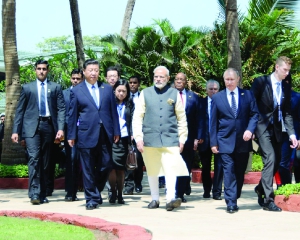
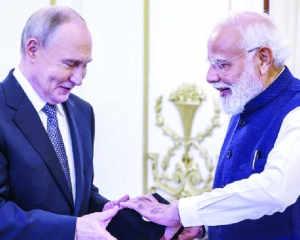
Ties with the US President Obama as well as the French connection or the relations with his Chinese counterpart are discussed minutely in this book. Modi has also maintained friendship with heads of Governments. Personal diplomacy is a standout characteristic of his doctrine.
The fourth chapter ‘Dancing with Diaspora’ focuses on preserving rights and interest of OCIs and NRIs. The book highlights Modi’s achievement of regaining India’s lost commercial prowess and special status in the world: “Ideas and actions, impressions and capacities, feelings and powers have all fused in the Modi doctrine to produce a stronger India in international affairs.” Making in India rather than importing things is the motto and backbone of the ‘Make in India’ programme. Similarly, the Modi doctrine has also helped in boosting India’s cyber security plans which is a significant move.
The ‘Neighbourhood First’ policy is discussed in chapter five. Modi’s doctrine combines liberal trade and commerce. It keeps checks on rising competition from China. It is expected that the ‘Neighbourhood First’ policy will taste success in future. For SAARC member countries, it’s the hallmark of a doctrine to have a systematic treatment of regions and issues with a distinct set of policies for each.
Chaulia says that the Modi doctrine is more than a grand strategy for India to conduct its foreign relations. “I have pointed throughout this book, placing India in the middle and augmenting it as an independent pole in the international system is the primary aspiration of the modi doctrine.”
Modi’s 360 degree foreign policy is transforming Indian national identity and outlook towards the world. His openness to fresh ideas and willingness to experiment are essential traits of moving ahead in the path of becoming leading country in the world.
The book questions the neglecting attitude of the previous Government of Manmohan Singh that didn’t define India’s goal. The major cause of Modi’s predecessor’s failure is said to be the limited interest in foreign policy of India. The differences exist because of implementation and timelines strictly followed by Modi in relation to previous successors: “lacking Inspiring leadership in the political class, India was struck in bureaucratic inertia and did not proactively dream to lead the world.”