The Battle of Longewala, immortalised in the film Border, was one of the most decisive engagements of the 1971 Indo-Pakistani War. Fought between December 4 and 7 in the Thar Desert of Rajasthan, it showcased the extraordinary courage, tactical brilliance, and resilience of the Indian Army. This defensive victory not only halted a major Pakistani armoured thrust but also reshaped the outcome of the war. Owing to its unique character, Longewala is now taught as a case study in leading military academies across the world. The 1971 war was triggered by the Bangladesh Liberation movement, as East Pakistan (now Bangladesh) fought for independence from West Pakistan. As Indian forces advanced rapidly in the East, Pakistan-anticipating imminent defeat-planned a major offensive in the Western theatre. The strategy was to capture Indian territory and use it as leverage during post-war negotiations.
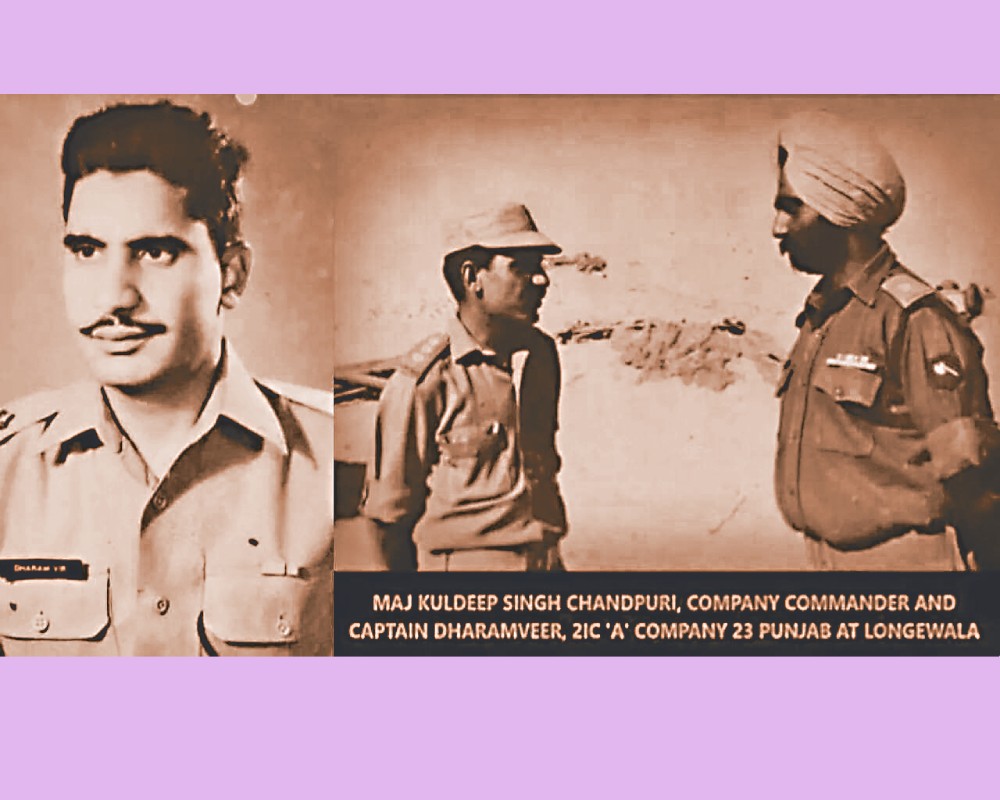
In Rajasthan, the Pakistani Army launched attacks along the border, with its main and most formidable thrust directed at the Longewala post. This post was defended by Alfa Company of the 23rd Battalion of the Punjab Regiment, commanded by Major Kuldip Singh Chandpuri. On December 4, 1971, Captain Dharam Vir of Alfa Company was on patrol along the International Border. Around 8:00 pm, he detected the unmistakable sound of tank movement across the border-indicating a large mechanized column approaching Longewala. He immediately relayed the information to Major Chandpuri, who at first found the scale hard to believe. But repeated confirmations from Capt Dharam Vir soon made it clear: an enemy infantry brigade supported by a tank regiment and an armoured squadron was advancing towards them.
This timely intelligence allowed the Indian defenders to quickly assume battle positions. Capt Dharam Vir was ordered to shadow the enemy column, provide continuous updates, and then withdraw to join the main defensive stand. Battalion Headquarters at Sadhewala rushed two recoilless guns to reinforce the post.
Defence Against Impossible Odds As darkness descended, the Pakistani armour advanced towards Longewala. Outnumbered and outgunned, Alfa Company held its fire until the enemy came within striking distance. Major Chandpuri moved across the defences, encouraging his men and coordinating urgently requested reinforcements and air support. Throughout the night of December 4, Alfa Company withstood repeated enemy assaults, repelling them with fierce determination. Their defensive stance prevented Pakistani forces from overrunning the post before dawn-a critical factor that would change the course of the battle.
The Turning Point
At first light on December 5, the Indian Air Force launched a devastating air campaign. Hawker Hunter and HF-24 Marut aircraft, guided by a Forward Air Controller, conducted precise bombing runs. Pakistani tanks, stranded in the dunes and unable to manoeuvre effectively, became easy targets.
By evening, the Pakistani advance had collapsed. They abandoned the battlefield, leaving behind 37 destroyed tanks and numerous vehicles. The Indian Army had secured a resounding victory.
Honours and Legacy
Major Kuldip Singh Chandpuri was awarded the Maha Vir Chakra for exceptional leadership. Many soldiers of Alfa Company received honours for their valour. The battle stands as a powerful reminder of the importance of defending sovereignty, adapting under pressure, and leveraging joint operations.
Strategic Significance
- Decisive Defensive Victory: Longewala demonstrated India's ability to repel a major armoured offensive with minimal resources.
- Protection of Rajasthan: The stand at Longewala prevented Pakistani forces from advancing towards Ramgarh and Jaisalmer.
- Impact on the Eastern Theatre: By failing in the West, Pakistan lost its only potential bargaining tool during the liberation of Bangladesh.
- Morale Booster: The victory significantly uplifted Indian Army morale.
- Global Military Lessons: Longewala continues to be studied for its exemplary use of defensive tactics, intelligence, and air-land coordination.
Key Factors Behind the Victory
Timely Intelligence: Capt Dharam Vir's early detection of Pakistani armour was critical in preparing the defences.
Effective Air Support: The Indian Air Force's relentless assaults played a decisive role in neutralising enemy armour.
Strong Defensive Positioning: The Indian Army's well-prepared positions and coordinated firepower proved superior despite being heavily outnumbered.
The Battle of Longewala remains one of the greatest examples of courage under fire. It is a testament to how determination, leadership, and strategic clarity can overcome overwhelming odds-and how a single night's stand can alter the destiny of a nation.