The two-day Sanatan Rashtra Shankhnaad Mahotsav began at Bharat Mandapam in New Delhi with Delhi Cabinet Minister for Art, Culture and Language Kapil Mishra inaugurating the event on Saturday.
The festival, which aims to highlight India’s civilizational heritage, Sanatan consciousness, and cultural discourse, opened to a large audience of spiritual leaders, thinkers and cultural personalities.
Calling the event “historic,” Mishra said the chant of “Jai Shri Ram” symbolised the proclamation of the Sanatan nation. He noted that such ideological discussions were once considered unimaginable and praised the support of both the Centre and the Delhi Government in making the event possible.
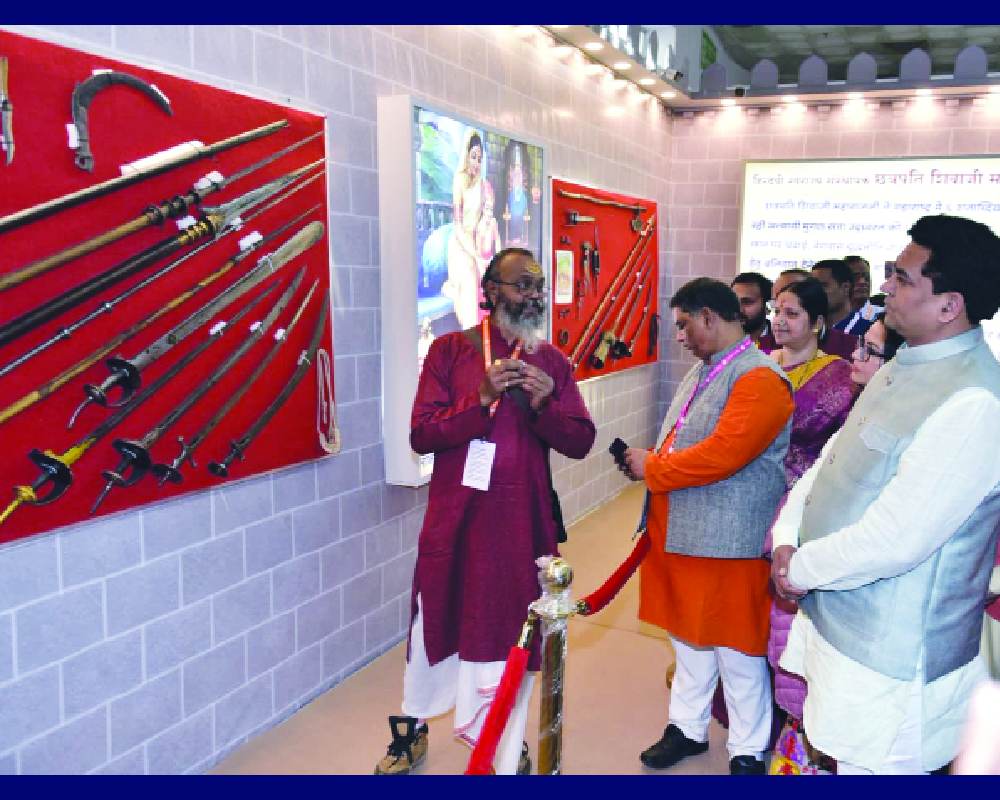
Citing the Ram Temple movement and historical temples like Somnath, Mishra said the Sanatan tradition is future-oriented and built on courage and cultural pride. “Ram Rajya is not defined by security alone but by social harmony and a shared sense of dharma,” he added. An exhibition on India’s martial heritage, featuring weapons from the era of Chhatrapati Shivaji Maharaj, was among the key highlights of the festival.
The event also hosted the International Janmangal Conference at Bharat Mandapam on December 12–13, which brought together saints, ascetics, yoga practitioners and women spiritual leaders from India and abroad.
The conference focused on strengthening the values of public welfare and nation-building through fasting, yoga, meditation and spiritual discipline. Mishra said the presence of spiritual masters inspires inner transformation and described austerities like fasting and meditation as the moral foundation of society.
Among those who participated were Mahamandaleshwar Swami Shanti Giri Ji Maharaj, Sadhguru Dr. Charudatt Pingale Ji, Uday Mahurkar, Dr Suresh Chavhanke, and Shakti Swaroopa Anjali Kangil Ji.
The festival and conference, both held at Bharat Mandapam, were described by organisers as symbols of cultural awakening and Sanatan consciousness.