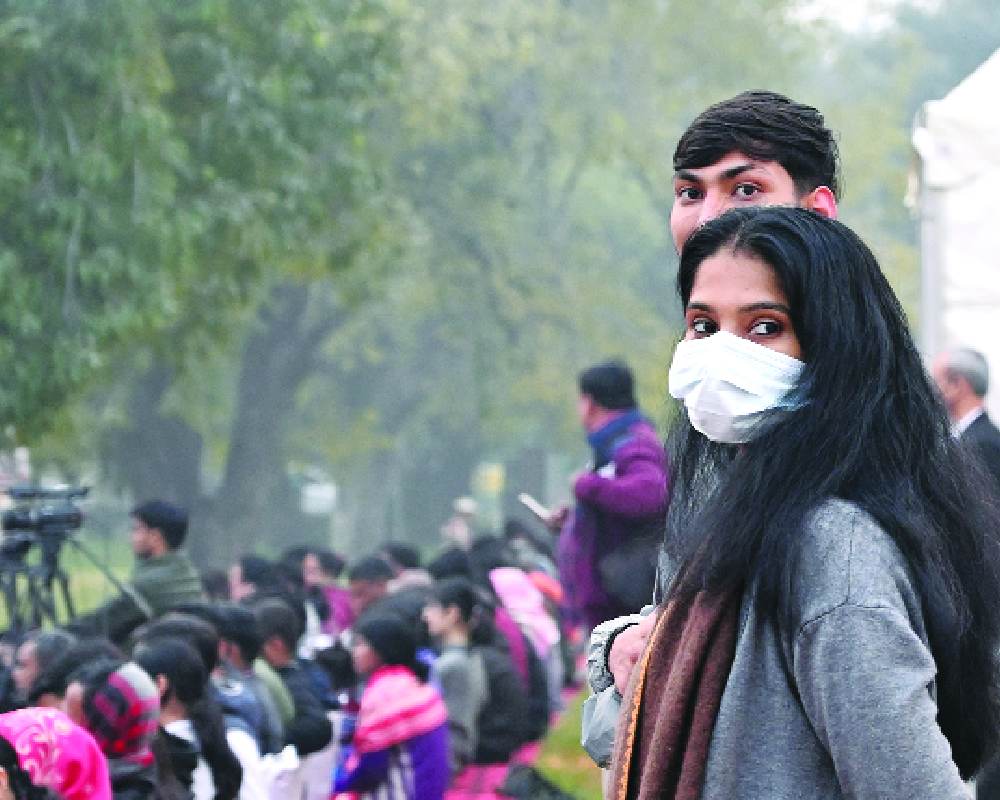
Amid sustained high pollution levels, hospitals in Delhi are witnessing a 20-30 per cent spike in respiratory patients, including many first-time cases and young adults, doctors said. They emphasised that the ongoing pollution crisis is a serious public health risk rather than a seasonal inconvenience.
On Saturday, the city’s air quality deteriorated further, slipping from the “very poor” to the “severe” category — a level that also affects otherwise healthy individuals —with readings crossing 400 in the red zone.
At 4 pm, the 24-hour average Air Quality Index (AQI) stood at 431, according to the Central Pollution Control Board (CPCB). Similar to winters in the several past years, Delhi continues to choke due to the toxic air, with pollution levels reported above 300 on most days. As a result, hospitals across the city are reporting a sharp rise in patients with respiratory distress, chest tightness and persistent cough.
Doctors said pollution levels worsen each year, and the number of people affected by poor air quality is steadily increasing.
Several doctors in Delhi said outpatient departments and emergency rooms have recorded a 20-30 per cent increase in patients presenting with acute and subacute respiratory symptoms over the past few weeks, coinciding with the prolonged high pollution levels.
“There is a distinct rise in patients coming in with cold, cough, breathlessness and chest tightness, which can be directly attributed to the poor air quality around us. The increase is nearly 15-20 per cent compared to earlier weeks,” Dr Avi Kumar, senior consultant pulmonologist at Fortis Hospital, Okhla, said.
What is worrying, he added, is the severity and persistence of symptoms. “Many patients have relentless symptoms that are not settling despite routine treatment. They are requiring higher doses of steroids and prolonged medication. Another distinct feature is the number of new patients — people who have never had respiratory issues before. Youngsters playing outdoors are also affected,” he said.
The polluted air is not a singular threat; a dangerous mix of PM2.5, PM10, nitrogen oxides, ozone, sulphur dioxide and hundreds of toxic chemicals released from vehicular emissions, industrial activity and waste burning compound the crisis.
These microscopic particles penetrate deep into the lungs and rapidly enter the bloodstream, triggering widespread inflammation and systemic health effects, according to health experts.
Dr Kumar said the prolonged exposure to polluted air is causing airway inflammation, reduced oxygen levels and worsening of pre-existing conditions.
“Over the past few weeks, there has been a 25-30 per cent rise in patients with breathlessness, wheeze and asthma or COPD exacerbations. Alarmingly, even individuals without a prior respiratory diagnosis are showing reduced oxygen saturation and heightened airway reactivity,” he said.
Doctors pointed out that vulnerable groups — including children, the elderly, diabetics and those with heart or lung disease — are bearing the brunt of the pollution. During high-pollution weeks, diabetics frequently report breathlessness, fatigue, prolonged respiratory infections and sudden fluctuations in blood sugar levels.
“A lesser-known impact of pollution is that it weakens the respiratory muscles that help move air in and out of the lungs. In diabetics with nerve damage, this makes breathing feel laboured even at rest,” Dr Ritu Aggarwal, consultant physician at a government hospital in east Delhi, said.
According to pulmonologist Dr Anil Goyal, many patients are coming from pollution hotspots along arterial roads, construction zones and industrial belts.
“We are seeing a surge from areas with heavy traffic density. Several patients report worsening symptoms after morning walks or outdoor exercise,” he said.