As societies grapple with discord and division, Gandhi’s legacy inspires us to embrace dialogue, empathy and unity
On January 30, 1948, three gunshots ended Mahatma Gandhi’s life but failed to extinguish the ideals he stood for. The physical silencing of Gandhi only immortalised his message of nonviolence, reconciliation and understanding. Seventy-seven years later, his teachings remain as vital as ever, resonating loudly in a world increasingly fraught with impatience, intolerance, and polarisation. In the face of these challenges, Gandhi’s life work continues to urge humanity to rediscover the virtues of patience, empathy, and constructive dialogue.
In our polarised global society, where divisions grow deeper and disagreements often turn hostile, Gandhi’s philosophy offers a beacon of hope. The sound of silence left by those three bullets asks a poignant question: Can humanity heal its divisions without resorting to violence? Though Gandhi’s message arose in a specific historical context, its relevance transcends time, providing an antidote to the impatience and discord threatening our shared humanity today.
Reviving Gandhian Ideals in Education
The urgency of restoring values like patience, dialogue and empathy is most pronounced in the education of younger generations. Early exposure to these principles can shape the leaders of tomorrow. Initiatives like Taking Gandhi to Schools integrate Gandhian philosophy into children’s lives through storytelling, discussions, and experiential learning. These programmes go beyond preaching; they immerse students in the practice of nonviolence and coexistence. For example, lessons on managing classroom conflicts teach students to approach disagreements with empathy and active listening—skills they carry into the broader world.
Educators and community leaders are also being empowered to foster these values. Workshops on nonviolent communication, mediation and conflict resolution turn abstract concepts into actionable practices. These tools have been successfully applied in diverse settings, from resolving domestic disputes to rebuilding trust in conflict-ridden communities. The Gandhian ethos of reconciliation—rooted in forgiveness, nonviolence and dialogue—provides a framework for healing even the most entrenched divisions.
The Transformative Power of Reconciliation
Gandhi’s approach to reconciliation was not just about resolving conflicts but about restoring relationships. He believed in confronting injustice with courage, yet harboring no hatred for the wrongdoer. This philosophy promotes harmony over revenge, emphasising understanding and collective wellbeing. Archbishop Desmond Tutu echoed this belief, stating, “True reconciliation exposes the awfulness, the abuse, the hurt, the truth.†Similarly, Nelson Mandela, inspired by Gandhi, viewed forgiveness as a tool for lasting peace, asserting, “Courageous people do not fear forgiving, for the sake of peace.â€
By embedding these principles into education and social discourse, Gandhi’s legacy becomes more than a commemoration; it becomes a lived reality. Seminars and discussions on topics like forgiveness, interfaith harmony, and dialogue encourage participants to reflect deeply and adopt these values. Immersive experiences like these inspire young minds to embrace nonviolence as a powerful force for change.
Gandhi Smriti: A Living Tribute
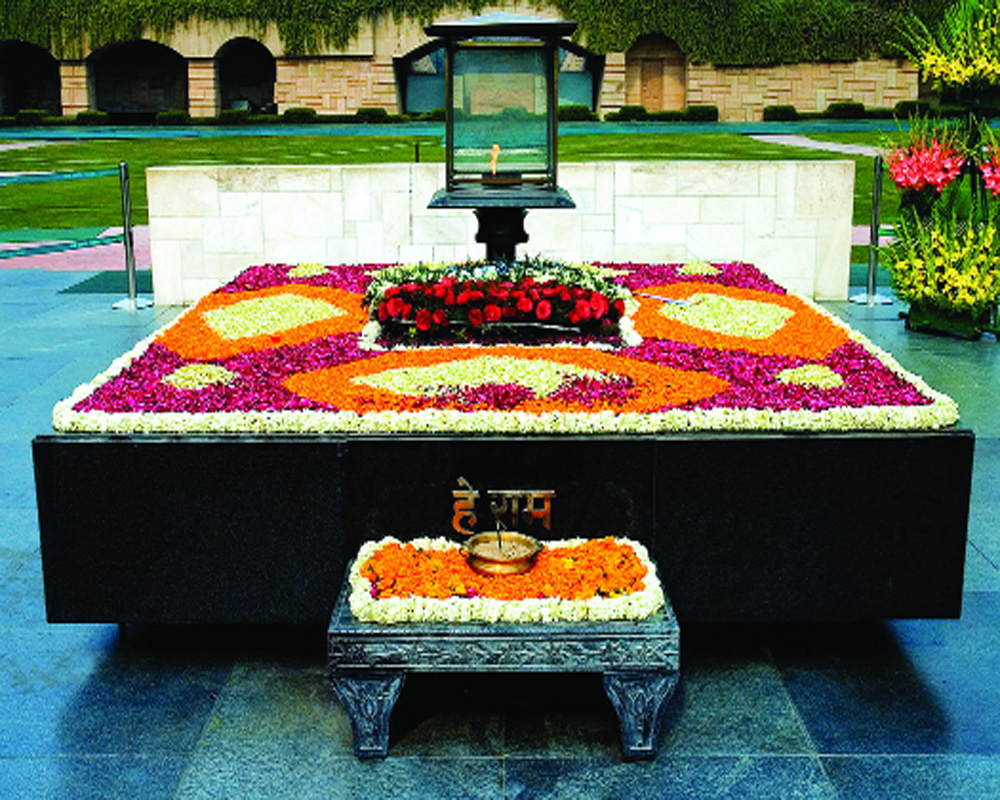
At the heart of Gandhi’s enduring legacy is Gandhi Smriti, the site where he spent his final days. Located at 5, Tees January Marg in Delhi, this historic place, once Birla House, holds profound significance. Gandhi arrived here on September 9, 1947, after finding his intended residence occupied by refugees from West Punjab following Partition.
Today, Gandhi Smriti is a national memorial, home to museums, Gandhi’s preserved room, and the prayer ground where he held evening meetings. It attracts visitors from around the world, serving as a place of pilgrimage and a reminder of the tragedy that ended his life. Yet, Gandhi Smriti is more than a heritage site; it is an educational hub where people of all ages, especially children, learn about courage, compassion, and responsible citizenship.
Every year, on Gandhi’s birth and death anniversaries, children perform musical tributes at the evening prayer meet. These events embody Gandhi’s belief that peace must begin with the young: “If we are to teach real peace in this world… we shall have to begin with the children.â€
A Call to Action
The principles Gandhi championed—nonviolence, reconciliation, and understanding—are not relics of the past but vital tools for addressing modern challenges. His teachings remind us that change begins with small acts of kindness, empathy, and constructive dialogue. By nurturing these values in young hearts, we lay the foundation for a more harmonious future. As we commemorate Gandhi’s life and philosophy, let us remember that the silence left by those three bullets was not an end but a beginning. It calls on us to transform divisions into unity, hostility into understanding, and despair into hope. The path to peace may be long and arduous, but it begins with the courage to believe in the power of nonviolence and the quiet persistence of nurturing hope in the hearts of the next generation.
(The writer is Programme Executive, Gandhi Smriti and Darshan Samiti; views are personal)