Cinema, at its core, is a collective experience. It draws strangers into a shared space, invites them to observe, reflect and respond together, and in doing so, shapes public imagination. For more than seven decades, the International Film Festival of India has functioned as a vital platform for this exchange, bringing global cinema into conversation with India’s evolving cultural identity. Founded in 1952 as a modest showcase of international films, IFFI has grown into South Asia’s most significant film festival, mirroring the country’s changing relationship with storytelling, technology and creative ambition.
The 56th edition of IFFI, held in Goa from November 20 to 28, 2025, marked a deliberate shift in scale and intent. Anchored in the theme “Convergence of Creativity and Technology,” the festival positioned cinema not only as an artistic practice but as a strategic driver of cultural influence and economic growth. Its timing alongside the Golden Jubilee year of the National Film Development Corporation further underscored this moment of transition, reinforcing NFDC’s renewed role in preserving legacy while actively shaping the future of Indian cinema.
The history that underpins IFFI
To appreciate the festival’s importance, one must first look at the foundations of Indian cinema. The nation’s screen story began in 1913 with Dadasaheb Phalke’s silent landmark, Raja Harishchandra, which used mythological narratives to establish a powerful, indigenous storytelling form. The coming of sound in 1931 with Alam Ara permanently embedded music and dialogue, forging the complex, multi-genre identity of Indian film. The artistic maturity of the 1950s and 60s saw the rise of visionaries like Satyajit Ray, whose profound humanism earned India enduring and respected status in the global artistic domain.
This dedication to cultural exchange led to the establishment of the IFFI in 1952. Inspired by the ancient philosophy of Vasudhaiva Kutumbakam (“the world is one family”), its purpose was to build bridges across nations through film. IFFI achieved competitive status in 1965 and holds the distinction of being the sole South Asian film festival accredited by the International Federation of Film Producers’ Associations (FIAPF). Since permanently moving to its tropical home in Goa in 2004, IFFI has become Asia’s most crucial annual forum for artistic, commercial, and policy dialogue.
The Festival Chronicle
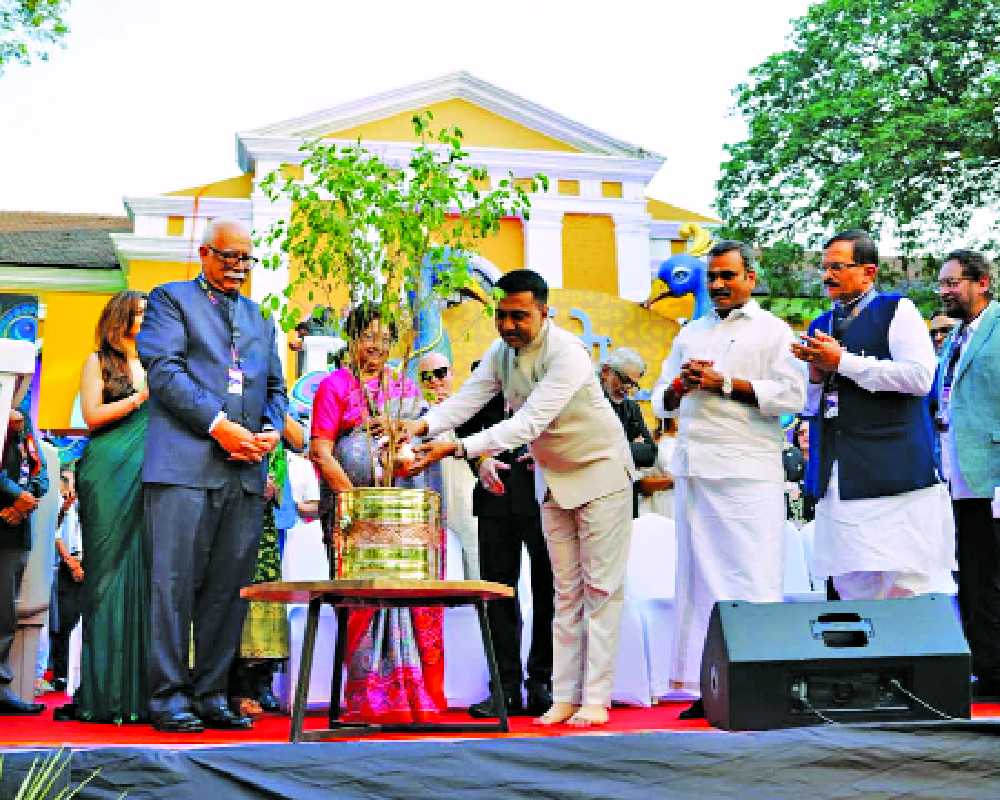
The 56th edition made a bold opening statement by commencing with a Historic Grand Parade in Panaji, rather than an exclusive indoor event. This unprecedented move instantly rendered the opening ceremony accessible and inclusive, dissolving the traditional boundary between an elite festival and the general public. The procession was a powerful display of cultural federalism, featuring magnificent floats and vibrant state tableaus from Andhra Pradesh, Haryana, and Goa.
The emotional peak was the “Bharat Ek Soor” collective-over a hundred folk artists from sixteen states whose combined rhythms and synchronized movement culminated in a breathtaking, living tribute to the national flag. In his official address, Chief Minister Dr Pramod Sawant cemented the state’s long-term vision, formally declaring Goa’s ambition to become the “Creative Capital of India.” The ceremony also paid profound respect to the industry’s icons, honouring legendary actor Nandamuri Balakrishna for his fifty-year screen career. The choice of films set an immediate standard of artistic and intellectual engagement:
International Opening Film: The Blue Trail (O Último Azul)
- The competitive section was led by this Brazilian dystopian drama, directed by Gabriel Mascaro. Having previously won the Silver Bear Grand Jury Prize at Berlinale 2025, the film, which follows an odyssey through the collapsing Amazon, compelled audiences to confront climate anxieties through a singular, human lens.
Indian Panorama:
- Feature Film: Rajkumar Periasamy’s Tamil film, Amaran, was selected to showcase the sophisticated craft and storytelling depth emerging from India’s regional powerhouses.
- Non-Feature Film: Kamlesh K Mishra’s Hindi film, Kakori, reaffirmed the festival’s dedication to powerful, non-fiction narratives dealing with crucial historical and social moments.
Incubation and economic strategy
The immediate transition from public ceremony to focused industry activity, solidifying IFFI’s function as a talent incubator and nexus for global partnership.
- Masterclass Series Inauguration: The Union Minister of State for Information & Broadcasting, Dr L Murugan, inaugurated the Masterclass Series at Kala Academy. This session was strategically opened to the general public for the first time, democratizing access to expert knowledge and drawing international professionals from Australia, Japan, Germany, and Canada.
- The Launch of CMOT 2025: The fifth edition of the Creative Minds of Tomorrow (CMOT) commenced, challenging 125 emerging creators with an intensive 48-hour filmmaking competition. Dr Murugan highlighted that this high-pressure environment was intended to refine their craft, linking the programme directly to larger governmental support for creative industries, such as the new Indian Institute of Creative Technologies.
- Ambassadors’ Roundtable on Co-Production: The festival served as a crucial diplomatic and commercial hub. The Roundtable was held to facilitate international co-production agreements and technology partnerships. Secretary Shri Sanjay Jaju emphasised India’s growing role as a global production centre. Dr Murugan underscored co-production as a vital pillar of growth, citing the projected expansion of India’s Media and Entertainment sector to USD 31.6 billion in 2025, a growth driven by technological advancements in VFX and robust anti-piracy efforts.
- Red Carpet & Dialogue: The Red-Carpet segment continued to draw high-profile talent (Anupam Kher, Jackie Shroff, Manoj Bajpayee), providing vital exposure for various film premieres. A deeply insightful “In-Conversation” session, “Cinema and Culture: Reflections from Two Eras,” featured filmmakers Muzaffar Ali and Shaad Ali, providing a critical lens on the evolution of artistic practice across generations.
The Engine Room The WAVES Film Bazaar was operating at peak efficiency as South Asia’s largest film market, creating a robust ecosystem for deal-making, co-productions, and project funding.
- The groundbreaking CinemAI Hackathon continued its focused work on applying Artificial Intelligence to cinematic innovation and critical areas like anti-piracy solutions.
- The IFFIesta Cultural Showcase provided the evening’s rich public engagement, seamlessly integrating the experience of global cinema with the celebratory, living traditions of Indian folk arts.
Resilience and Reflection
The Day became a day of intellectual and emotional climax, dedicated to the sheer tenacity required to sustain an artistic career.
- The Masterclass of Willpower: The most significant event was the Masterclass delivered by the veteran actor and speaker Anupam Kher, powerfully titled: “Giving Up is NOT a Choice!” Held at Kala Academy, the session transcended mere acting technique, offering a profound, motivational blueprint for sustaining a life in the arts through conviction and perseverance.
- Creative Minds Present: The intensive 48-hour Challenge of CMOT officially concluded, with the young filmmakers presenting their final works-a raw demonstration of their ability to execute a creative vision under rigorous pressure.
- Global Press Narratives: The PIB Media Centre hosted a marathon of cross-cultural dialogue:
- International Voices were heard from the teams behind films like De Tal Palo, Pike River, Karla (Christina Theresa Tournatzès), and Renoir (Hayakawa Chie).
- Asian Cinema found a strong platform with the makers of Seaside Serendipity and Tiger (Anshul Chauhan), emphasizing regional artistic momentum.
- Indian filmmakers representing diverse regional and documentary work, including Sandesh Kadur (Nilgiris — A Shared Wilderness), Paresh Mokashi (Mukkam Post Bombilwadi), and Debangkar Borgohain (Sikaar), engaged the media.
- A Sound Legacy: The day concluded with an intellectual tribute during the Lata Mangeshkar Memorial Talk, “The Rhythms of India: From the Himalayas to the Deccan,” where composers Vishal Bhardwaj and B. Ajaneesh Loknath discussed the complex, emotional, and structural role of music in shaping the identity of Indian cinema.
Why does a festival like IFFI matter in today’s world of cinema?
The 56th IFFI, through its radical public opening, focused diplomatic efforts, and masterclasses, showcased films while shaping the future ecosystem of film creation and distribution. In a fragmented, digital world saturated with content, IFFI emerged as an essential physical nexus — a place where deals are struck, co-production treaties are signed, and the human spark of a young creator is ignited through mentorship.
It stood as a powerful international corrective, reaffirming that cinematic value lies in cultural depth, technological innovation, and artistic excellence, not commercial returns alone. As technology grows capable of replicating spectacle with ease, the festival leaves behind a quieter, more urgent reflection: how will global cinema protect the human heart of storytelling in a future increasingly shaped by machines?