A student, Neil Binoy talks about the curtailment and dilution of Question and Zero Hours in Parliament and the cascading effect on children
The children of India face an array of problems that haven’t seen the limelight in long aeons. Some of these should be carefully cross-examined and dissected by our Parliament. It must be freed from its shackles if we are ever to hope that our issues may be addressed one day. What can we call a Parliament that shies away from questioning? We need a system, which can effectively surveil and look into all new decisions and plans. For this, we require no system other than the one we already have in place; it only calls for it’s complete and absolute freedom. Upon seeing news reports regarding the removal of the Question and Zero Hour, I was much concerned and decided to write this piece.
So the question is — why does this curtailment lead to so much controversy? The government has moved to restrict democratic voices and hide from probing questions about its policies and actions. This is yet another act that edges this government closer to the brink of centralising power. In this case, they have tried to avoid the checks and balances that Parliament provides. What this means is that it provides the government with an opportunity to execute a number of corrupt or damning decisions, hidden from the common man’s eye and the Parliament’s scrutiny. However, in this blatant attempt to blind the people of this country, it is not just the Parliament that is subject to such actions. The media, too, has been blindsided by the destruction of their freedom, resulting in a world filled with fake news and soothsayers.
But these decisions against freedom of speech also threaten to cause a vast amount of damage to the environment through two specific decisions: One, the brand new plan to widen the roads into highways in the Himalayas, a decision which has already led to widespread muck dumping and damage the sensitive essence of the mountains. In a sickening report, it has been revealed that the project has been the root cause of an increase in landslides and putrid clumps of waste in the surrounding areas. Second, the government has plans in place to change the definition of illegal mining, opening up new loopholes to be exploited. This requires the questioning that is currently being silenced. Why is the environment the least concern? Why is it not being given the importance it should? It is inevitably our mismanagement of the environment that has given rise to the devastating natural disasters that have come raining down on our heads. There is yet still one more aspect which is rarely considered. This environment is something that we are to inherit, but in the current state, it will be hard to repair it. Eventually, our country will become uninhabitable with the increasing number of natural disasters. If the Parliament will not be allowed to protect the vast biodiversity and ecosystems of our country, then what or who, is left to stay the destructive nature of many of the policies that come flying down the tubes?
Poor decisions combined with the lack of any prior announcement can be deadly as we have already seen in the pandemic-induced lockdown. It has had its share of adverse effects. When the lockdown came flying literally out of the blue in March, with just a few hours of notice, nobody knew what hit them. People who had come to the big cities to work, now found themselves in a terrifying predicament. They were stranded in a foreign environment with steadily rising bills. Cross that with the massive lay-offs that have been a staple of the pandemic so far and they are left with no means to pay those bills. In an act of desperation, a 15-year-old student was forced to cycle 1,200 kilometres with her ailing father, subsisting on a meagre ration of biscuits.
What are millions of tons of grains doing rotting in Indian silos, while men, women and children die of hunger on the streets? These, in and of themselves, are problems enough but the mismanagement of the pandemic has spawned yet more. As demands for crops go down, farmers’ crops are no longer profitable and many are unable to pay back their debts, leading up to a widespread increase in the number of farmer suicides. Where is the necessary parliamentary criticism that can bring an end to their pain? Aren’t they citizens of this country as well, just as deserving of the rights and privileges we enjoy today?
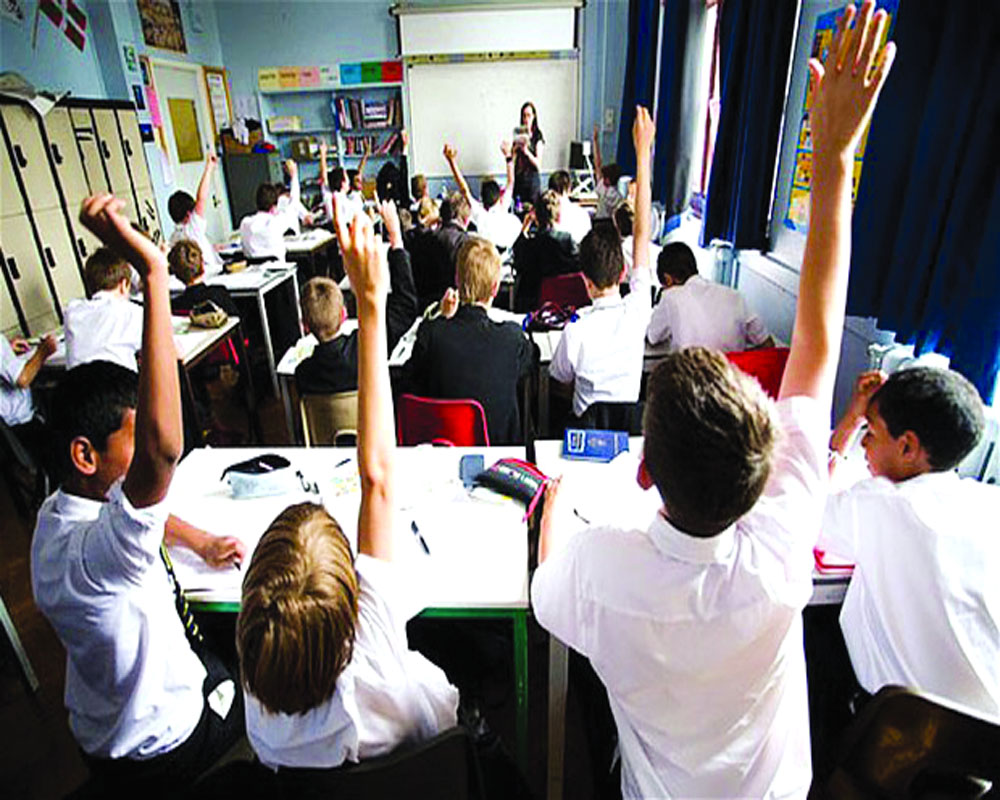
During this lockdown, another prominent feature is that of online education. However, not many children can find the means to access it. The government can at least have provided small tablet devices. Why is a divide between haves and have-nots being allowed to develop? Why is this issue, one which matters to millions of children, not being questioned?
Recently, I have been reading articles lauding the new National Education Policy but none of them talks about the content of education. Most of us today aspire to be successful businessmen and philanthropists like that of Bill Gates and Azim Premji. However, our current education system doesn’t teach us how to start a business or how to run a charity. If money-making is vital for economic development, why are we not taught this highly important subject? This is an issue not solely restricted to business and philanthropy but also something essential to our society which is, regrettably, missing from our schooling systems: Empathy, Sympathy and Ethics. Why are our students not taught about the very holding line of a community? We have reached a stage where we can no longer swear by textbook education and hope for the best. To create a massive, nationwide change, we require a change in our curriculum and the way children are taught in India. We require a system with a more hands-on, example-based and grounded approach to education. As our world evolves, so should mould our education systems to tailor itself to fit the new world.
I would like to be the voice of those millions of children in our country. We are the future of India. Respected Chairman of Rajya Sabha and Speaker of Lok Sabha, you are holding positions of great importance, which can easily make or break our potential future. Without the supporting role that our Parliament’s questionings provide, the weakened framework will inevitably come blazing down. I suggest you open the Parliament for children for one day in a year to listen to our voices. We, the children can come out with better questions, better suggestions and raise issues that matter to us. Parliament is a great institution to question the system. If questions are not allowed, many wrongs can happen that could destroy the future of our country.
(The writer is a 12-year-old student and a gold medalist at the International English Olympiad.)