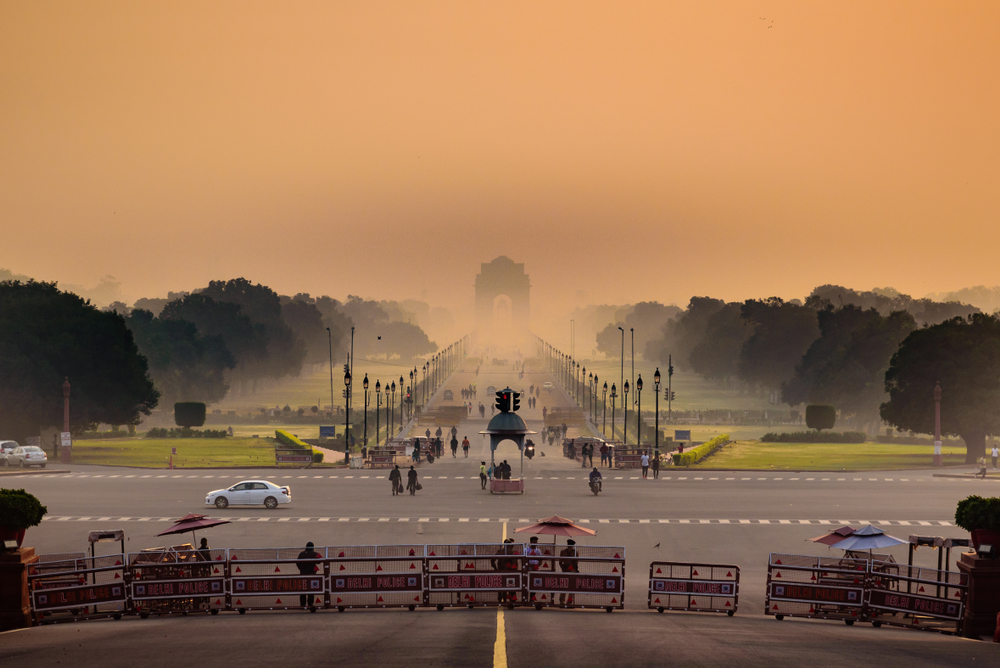
It was yet another well-lit Diwali that people long for all year, as houses and streets were lit and there were fireworks in the skies and crackers bursting all over. It was yet another Diwali celebrated with joy and gaiety. But the morning after was not that pleasant, as once again, the capital woke up to a blanket of toxic haze instead of sunshine. Despite court orders, Government warnings, and awareness drives, Delhi’s air quality plummeted to dangerous levels.
According to data from the Central Pollution Control Board (CPCB), 36 out of 38 monitoring stations in Delhi slipped into the “red zone” on Diwali night, recording “very poor” to “severe” levels of pollution. Four areas — Dwarka (417), Ashok Vihar (404), Wazirpur (423), and Anand Vihar (404) — crossed the dreaded AQI mark of 400, placing them squarely in the “severe” category. By 10 pm, Delhi’s overall AQI stood at 344 — a figure that only worsened as the night deepened and the firecrackers continued long past the Supreme Court’s permitted hours of 8 pm to 10 pm. It was no surprise, though and was expected, going by past experience.
Each year, the same script plays out: the Government blames citizens, citizens blame the administration, and courts pass directions that go up in smoke on Diwali night. Delhi’s stint with bad air starts with Diwali year after year, and no one takes responsibility, though everyone is to blame — the Government, the judiciary, and people — but accountability is never fixed. On Diwali night, all forget that there are old people, patients, and children gasping for fresh air. The Supreme Court has time and again issued guidelines on the sale and use of “green firecrackers,” yet enforcement on the ground is missing. State authorities, despite invoking Stage II of the Graded Response Action Plan (GRAP), have failed to ensure timely implementation or strict compliance. Political will is missing and administrative inertia is always in place.
Citizens, too, must shoulder their share of blame. The disregard for court directives, the indifference to the impact of pollution on children and the elderly, and the tendency to treat public health as someone else’s problem — all reveal a disturbing apathy. Civic responsibility must not stop at social media outrage. When residents knowingly burst crackers past midnight or burn waste in their colonies, they become complicit in poisoning the very air their families breathe. The consequences are grim.
For the next few months, respiratory illnesses will spike. Hospitals will see a surge in cases of asthma, bronchitis, and chronic obstructive pulmonary disease. And the worst is yet to come. The festival fireworks merely mark the beginning of the season of smog. In the coming days, the burning of crop stubble in fields will add another layer of toxins in the air. The combination of heavy air, temperature inversion, and emission build-up will turn the city into a gas chamber.
It is a grim situation and demands a collective awakening. The Government must move beyond ad hoc firefighting, and courts must push for accountability, not just guidelines. Delhi’s pollution crisis is a mirror to our national conscience — reflecting our inability to act in unison for a shared good.