As panic spirals in Islamabad, India responds not with noise, but with quiet, deliberate readiness. Across land, sea, air and cyberspace, a new dialect of deterrence — rooted in credibility, capacity, and control — has taken shape. And in that language, New Delhi has already spoken
I have spent thirty-five years in uniform, and one truth has stayed with me: the side that controls psychology and preparation wins half the war before the first shot is fired. Today, that truth works in India’s favour. Panic races through television studios in Lahore; Cabinet ministers in Islamabad delete midnight tweets about “imminent Indian aggression.â€
On our side of the fence, we tighten boot-laces, rehearse drills, and wait. Today, panic ricochets in Lahore TV studios. Also discernible across the fence is hypothetical hysteria — hashtags, deleted tweets, and nocturnal Cabinet huddles — because India is now speaking in the one dialect Islamabad cannot spoof: credible readiness fused with national will. Within seventy-two hours of the Baisaran Meadows massacre, New Delhi suspended the 1960 Indus Waters Treaty. For six decades, we treated that as sacrosanct — even amid the wars of 1965 and 1971, it did not lose its sanctity.
Touching it now signals that no previous restraint is automatically renewable once Indian civilians are at stake. The reservoirs may still brim, but the psychological shock wave crossed Wagah before dawn. Days after the killings, India instructed the Army, Navy and Air Force Chiefs to decide the timing, place and shape of a response to their convenience and comfort. There was not an iota of movement from our side, yet Pakistan redrew psychological terrain overnight. Islamabad’s irrigation ministry plunged into emergency sessions before dawn, TV anchors in Lahore rehearsed nuclear threats, and a midnight tweet from Pakistan’s Information Minister predicting an “imminent Indian attack†vanished almost as quickly as it appeared. The spectacle captured a larger truth: long before the first shell is fired, India is already a stride ahead. History supplies the first measure of Islamabad’s unease. In 1947–48 India blocked the tribal invasion of Kashmir; in 1965 it repelled Operation Gibraltar; in 1971 it split Pakistan in two; in 1999 it clawed back the Kargil Heights under a global spotlight; and in 2016 and 2019 it executed a surgical strike and a deep-penetration air raid for minimal loss and maximum deterrent effect.
The pattern is brutally consistent. Islamabad flirts with proxy warfare, Delhi answers with calibrated escalation, and the diplomatic scorecard inches towards the Republic every cycle. Suspension of the Indus pact announces that the ceiling of Indian restraint — once thought permanent — can be raised whenever civilians die.
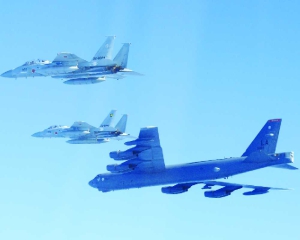
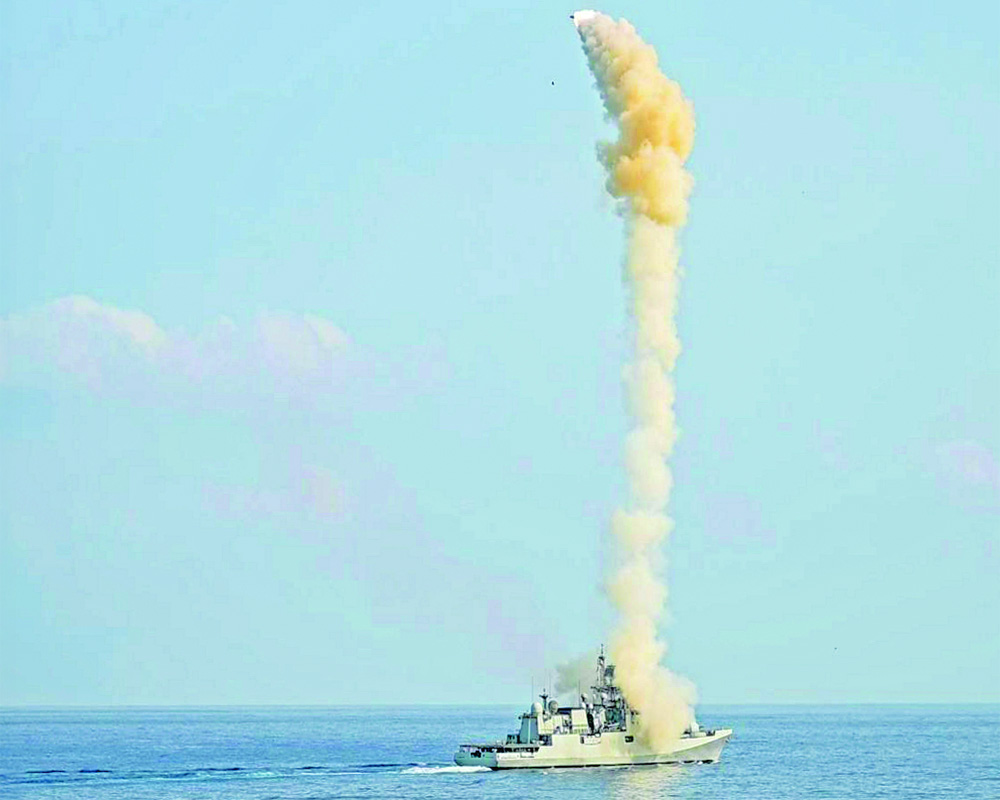
In strategic terms, that message is louder than the thunder of artillery. Material power underwrites the new tone. The Indigenous Aircraft Carrier 1, INS Vikrant, now manoeuvres in the Arabian Sea with a deck of Tejas fighters and a screen of guided-missile destroyers, placing Karachi within BrahMosrange. Rafales armed with Meteor missiles conduct pop-up drills over Rajasthan; Sukhoi-30MKIs practise night penetrations over Punjab; and Integrated Battle Groups disperse along the frontier under the “cold-start†doctrine of rapid, shallow thrusts designed to punish without triggering nuclear thresholds. India’s deterrent triad — Agni ballistic missiles on land, Arihant-class submarines at sea, and a modernised air fleet overhead, is bolstered by a digital layer that would have been science fiction a decade ago. Machine-learning modules parse satellite feeds and social media chatter in real time; loitering drones lope across target areas for hours; quantum-encrypted links secure command loops; and 5G battle nets move sensor data faster than an adversary can jam. Deterrence, once measured only in megatonnage, now includes petaflops. These capabilities rest on an economy large enough to finance them. A 3.5-trillion-dollar GDP fuels spare parts, surveillance constellations and smart munition lines under the Atmanirbhar Bharat banner, while Pakistan’s foreign exchange reserves barely cover a month of imports. War, as Sun Tzu noted, is often won when the enemy’s will collapses; in the twenty-first century, spreadsheets accelerate the collapse. Each week of mobilisation drains Islamabad’s reserves, spooks its credit-rating agencies and shrinks the rupee’s purchasing power on the streets of Rawalpindi. Diplomatically, Delhi moves in wider orbits.
The United States, the European Union, Japan and Australia cite Article 51 of the UN Charter and endorse India’s right to self-defence; Gulf monarchies, mindful of refinery stakes and expatriate remittances, quietly prefer Indian stability to Pakistani brinkmanship; Beijing, hedging between Belt-and-Road assets and a booming trade ledger with India, confines itself to boilerplate peacemaker lines.
Even the Taliban Government in Kabul, once described as Pakistan’s “strategic depth,†condemned the Pahalgam killings and reopened talks on road links that bypass Pakistani ports altogether. It is difficult to find a more explicit sign that alliances are fluid and influence is fungible. Why, then, does Pakistan flinch? Political economists such as Daron Acemoglu would call its institutions “extractiveâ€: a praetorian Army that doubles as landlord and conglomerate; civilian ministries that collapse under seasonal intrigue; courts that oscillate between activism and intimidation; and a fiscal pipeline that survives on IMF ventilators. Under external stress, those institutions emit contradictory communiqués, fuelling the impression of a cockpit without a clear pilot. In the present crisis, missile threats and calls for dialogue tumble out of the same press conferences within hours, leaving foreign observers puzzled and domestic audiences anxious. Irony compounds anxiety: cash machines in Islamabad flash “No USD available†while prime-time anchors promise nuclear Armageddon. In police slang, the loudest suspect is usually the weakest. None of this means India can afford complacency. A cornered adversary might attempt lone-wolf attacks, cyber pranks or disinformation blitzes, making vigilance the watchword from Srinagar’s bunkers to CERT — In’s server rooms.
City surveillance grids are refreshed, railway stations rehearse evacuation, and botnet fingerprints circulate across the cyber shield. Victory, when it comes, will not resemble a ticker-tape parade; it will resemble a continuous patrol — sometimes dull, often invisible, always essential. Still, the broader balance remains stark.
The Indus Treaty suspension shattered the illusion that water is off limits; the freedom given to Service Chiefs erodes Pakistan’s confidence in predictable escalation ladders; the presence of a carrier group off Karachi’s coast signals a fourth border under Indian supervision; high-velocity economics and new-age technology multiply Delhi’s options without requiring headline-grabbing offensives. Meanwhile, Islamabad confronts a shortage of hard currency, a surplus of militant proxies and a diplomatic bench that whispers “restraint†while the world listens for “results.†Weak institutions amplify every shock wave; strong institutions absorb it, decide, and act. That difference is visible from space, whether via satellite imagery of forward deployments or the quiet routes taken by foreign capital. From a nationalist vantage, this alignment of factors feels like vindication: resolve in Delhi, preparedness along the front, global opinion leaning away from terror apologia. Yet the true measure of patriotism lies not in triumphalism but in disciplined purpose. India’s objective is not regional humiliation for its own sake; it is the irreversible rollback of cross-border terrorism, the assurance of civilian safety and the demonstration that democracy can wield hard power without slipping into adventurism.
If credible pressure — legal, economic, informational, military — forces Islamabad to dismantle its proxy infrastructure, then the campaign’s first goal has been met without a brigade crossing the river. Should that pressure fail, the infrastructure supporting Indian retaliation is already in motion, from forward airbases to encrypted command rooms. In that sense, half the war is indeed won, though not by jingoistic proclamation. It is won when a hostile state’s nerve falters because every pathway forward looks costlier than the one behind. It is won when international sympathy coagulates around the victim rather than the aggressor. It is won when the stronger economy can keep its factories humming while the weaker counts down its reserves.
And it is won — perhaps most decisively — when a nation’s soldiers, engineers, coders, farmers and vendors align spontaneously behind a shared conviction that their borders, whether terrestrial, maritime, aerial or digital, are lines that will hold. Across those lines, the mood in Pakistan vacillates between bravado and foreboding, a pendulum powered by uncertainty. In India, the mood is steadier: calm, watchful, quietly confident that preparedness and proportionality leave little room for blackmail.
The next move may well belong to Islamabad, subject as always to its contradictions. Should it reach for escalation, the response will be brisk; should it reconsider, dams will keep flowing, ports will remain intact and borders will stay patrolled rather than breached. Either way, the strategic narrative has tilted. In the new dialect of hybrid deterrence — part hardware, part software, part statecraft — India has spoken first and more persuasively. The echoes will linger.
(The writer is an IPS officer working as DIG/Additional Director, UPSIFS, Lucknow. He holds a post-graduate degree in International Diplomacy from JNU, had also worked as a peacekeeper in the United Nations Missions, besides having had a stint in NYPD. Views are personal)