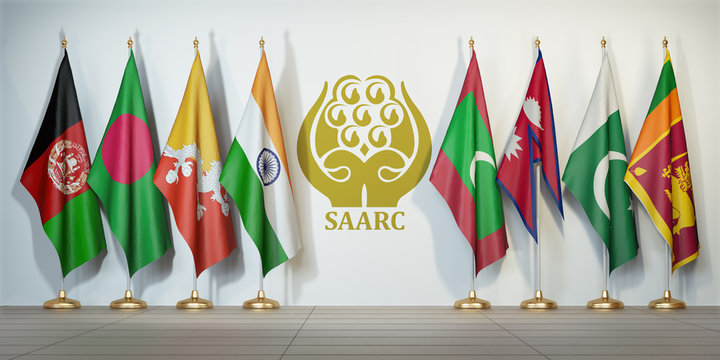
Forty years ago, South Asia envisioned a regional alliance that would serve the collective interests of a region home to one-fifth of humanity. Inspired by successful models like ASEAN, leaders believed that shared history and geography could form the foundation for meaningful cooperation. Yet the promise of this vision remained unfulfilled. While other regional blocs prospered, SAARC — the South Asian Association for Regional Cooperation — struggled to take off. Despite its lofty ideals and sincere efforts, political fault lines repeatedly overshadowed the organisation’s purpose, preventing the region from realising the benefits of true collaboration.
As South Asia marked the 40th anniversary of the SAARC Charter in Kathmandu this week, it is time to reflect on what exactly happened and why the region that needs cooperation could not cooperate. In Kathmandu, the occasion was rich in symbolism and sober in its reminders. Diplomats, policymakers, and representatives from across the region gathered to commemorate a vision conceived in 1985 - one that aspired to bind the subcontinent in cooperation, dialogue, and shared progress. Despite the lip service to it, the big question is where SAARC stands today, and whether it can reclaim the promise it once held or it is time to give it an august requiem. SAARC’s journey over four decades can be described in two words — hope and hesitation.
The SAARC Food Bank, the South Asian University, the SAARC Development Fund, and regional agreements on trade and energy cooperation demonstrated a willingness to create shared platforms for collective benefit. These platforms were indeed a step in the right direction, but they still lack on delivery. SAARC’s greatest success has arguably been its ability to keep a diverse and often fractious neighbourhood engaged in dialogue. Indeed, SAARC remains a rare forum where South Asian nations can meet as equals, beyond bilateral constraints. In this sense, it has served as a stabilising anchor — a reminder that geography binds the region far more tightly than politics divides it. Yet the challenges have been equally persistent. The organisation has long been hostage to political tensions, especially between India and Pakistan. SAARC’s consensus-based model, once seen as a strength, has become its weakness. Summits have been postponed, agreements stalled, and meaningful integration — particularly in trade — remains far below potential. Secretary General Md Golam Sarwar’s remarks during the anniversary reception reflected both pride and pragmatism. He acknowledged SAARC’s evolution - from institution-building in the first decades to broader global engagement today. But global outreach cannot substitute for intra-regional dynamism. Without political will, even the most well-crafted charters remain aspirational. The road ahead demands realism. Reviving SAARC does not require rewriting its Charter but functional cooperation in areas that transcend political divides, like health, climate adaptation, and cultural exchanges. At 40, SAARC is not obsolete but underutilised; its future lies in realising its strengths.