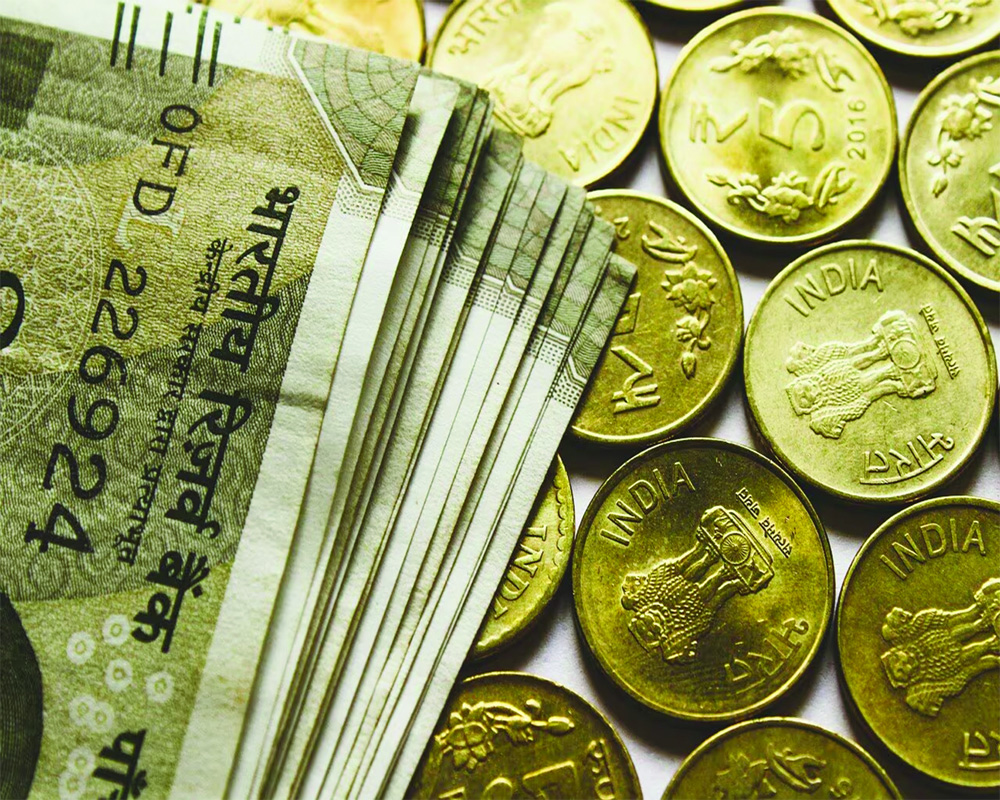
The circulation of coins in multiple sizes creates considerable confusion. Implementing a standardised approach to currency would improve efficiency
Presently there are three sizes each in coins of denominations of rupees one and two, creating big confusion amongst members of the public. One-rupee coin is in circulation in diameters of 20, 22 and 25 mms, while coins in denominations of rupees two in circulation are 23, 25 and 27 mms. Such nearing or same sizes of coins in denominations of rupees one and two cause big confusion. To remove all confusion, the central government should stop minting two-rupee coins at least for the time being. Practically only varying sizes of two-rupee coins create confusion.
The System should be that either coins or currency notes should only be issued in any of the denominations. Weights of coins in denominations of rupees 1, 2, 5, 10 and 20 respectively should be rationalised in round figures of 3, 4, 6, 8 and 10 gms respectively. The size of currency notes was changed after the year 1967 between the years 2016 to 2019 after a new currency set was issued due to the demonetisation of old currency notes of rupees 500 and 1000 on 08.11.2016. Reserve Bank of India (RBI) should ensure that, currency-size if required to be changed, may be done in one go for notes of all denominations. With the printing of notes in denominations of rupees 1 and 10 already discontinued, the printing of rupees 20 notes should also be discontinued after coins of this denomination are now popular in circulation, thus paving the way for the new smaller-sized currency of rupees 50, 100, 200 and 500 but retaining colours of these notes same respectively in different denominations to avoid confusion amongst members of the public.
Plastic currency (then for ten-rupee notes) was stated to be issued long back by the then Union Minister of State for Finance Namo Narain Meena on 12.03.2013 in a written reply in Rajya Sabha. But it was never implemented. Plastic currency prevailing in several countries is found successful in increasing the lives of currency note manifolds. Fifty-rupee currency notes of plastic may be issued on an experimental basis. If the idea becomes successful, then currency notes of all other denominations can be issued in plastic currency.
These steps will reduce the cost of currency circulation. Smaller packs of 100 coins in each denomination should be always made available in plenty at all branches of various private and public sector banks and in all post offices for ease of normal public.
Bigger packs can have twenty small packs of 100 coins each thus having a uniform bigger pack size of 2000 coins in each denomination rather than as at present in confusing pack sizes of 2000 and 2500 coins. It is observed that even bigger bank branches equipped with currency chests usually do not have coins of desired denominations.
Unwanted coins of rupee-two denominations are however always available, thus making gimmick popularity of two-rupee coins. Selling coin-bags of new coins and also new packs of currency at a premium should be altogether banned. These are openly sold at a heavy premium depending on demand and supply. Re-introduced one-rupee note packs of 100 on 06.03.2015 never-never reached at bank-counters for public distribution, but were always available right from 06.03.2015 at heavy premium with private dealers of new currency. Only very few were aware that one-rupee notes were re-issued on 06.03.2015 after being discontinued two decades back. Significantly, only one-rupee notes bear the signature of a secretary-rank officer of the central government, while notes in all other denominations bear the signature of the RBI governor.
One-rupee note was re-issued for the bureaucratic craze to sign these notes. Even though the printing of one-rupee notes has since been discontinued, enquiry should be initiated on the re-issue of these one-rupee notes on 06.03.2015 with existing print-stock sold by RBI as souvenirs in attractive plastic-packs so that government rather than currency dealers may earn as premium on one-rupee notes.
The first silver-alloy commemorative coin with a face-value of rupees ten in independent India was made available for the general public at face-value right from the date of issue on 02.10.1969 on Gandhi’s Birth Centenary. Metal value at that time in silver-alloy coins used to be about half the face value.
This practice continued for several years. But later the practice was changed to have a face-value much less than the prevailing metal value. For example, silver-alloy commemorative coins issued on 24.12.2018 to mark the birth-anniversary of late Prime Minister Atal Bihari Vajpayee had a face-value of just rupees 100 whereas the metal value of the coin even at the time of issue was multiple times the face value. It should be ensured that these coins may be issued on face-value by making it say rupees 1000 with metal-value being about half of the face value of the coin.
However, to prevent fake and duplicate coins, these high-value silver-alloy coins can be packed in tamper-proof plastic-packs with serial numbers. Commemorative coins whenever issued, should be in all commonly circulated denominations like rupees one, five, ten and twenty also so that the occasion may be commemorated by the masses also through the issue of commemorative coins. Official commemorative gold coins of five and ten gms with 80 per cent gold and 20 per cent silver in face values of rupees 5000 and 10000 respectively can also be issued in attractive tamperproof plastic packs with serial numbers.
Only one (say costliest Proof category) coin-set with all denominations of coins issued on the occasion should be simultaneously released for afford coin-collectors at convenient distribution including all RBI offices, selected bank branches (private and public sector), all political counters right from the date of issue rather through cumbersome procedure of advance-booking with booking started much later after date of issue of commemorative coins with actual delivery of coin-sets still later at times after about a year. Information received under the RTI Act reveals that at times commemorative coin sets are booked only in some hundreds.
All such steps will tremendously increase the sale of commemorative coins and coin-sets thus generating appreciable revenue-earning since such high-value coins and coin-sets never come into circulation. First-ever sale counter for commemorative silver-alloy coins was opened on 20.01.2020 at the office of Security Printing and Minting Corporation of India Limited (SPMCIL) at Jawahar Vyapar Bhawan (Janpath - New Delhi) with some coin sets put on direct sale without any advance-booking.
But just one sale-counter in a big country with a population of 140 crores is not enough. The sale of coin sets should also be through credit and debit cards. The sale of round-shaped silver or gold coins prepared in the private sector should then be banned to further prevent the manufacture of fake and duplicate coins. A Division Bench at Madurai of Madras High Court on 04.02.2021 had recommended considering printing a photo of Netaji Subhash Chandra Bose on currency notes.
An altogether new series of currency notes should be issued in different denominations with a note of each denomination having a photo of one pre-independence hero who might have expired before independence to avoid political controversies. Likewise, photos of different dignitaries can be embossed on commonly-circulated coins of different denominations.
(The writer is an RTI activist; views are personal)