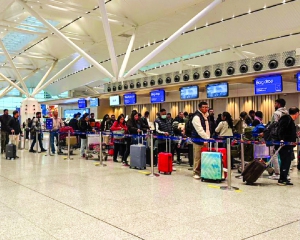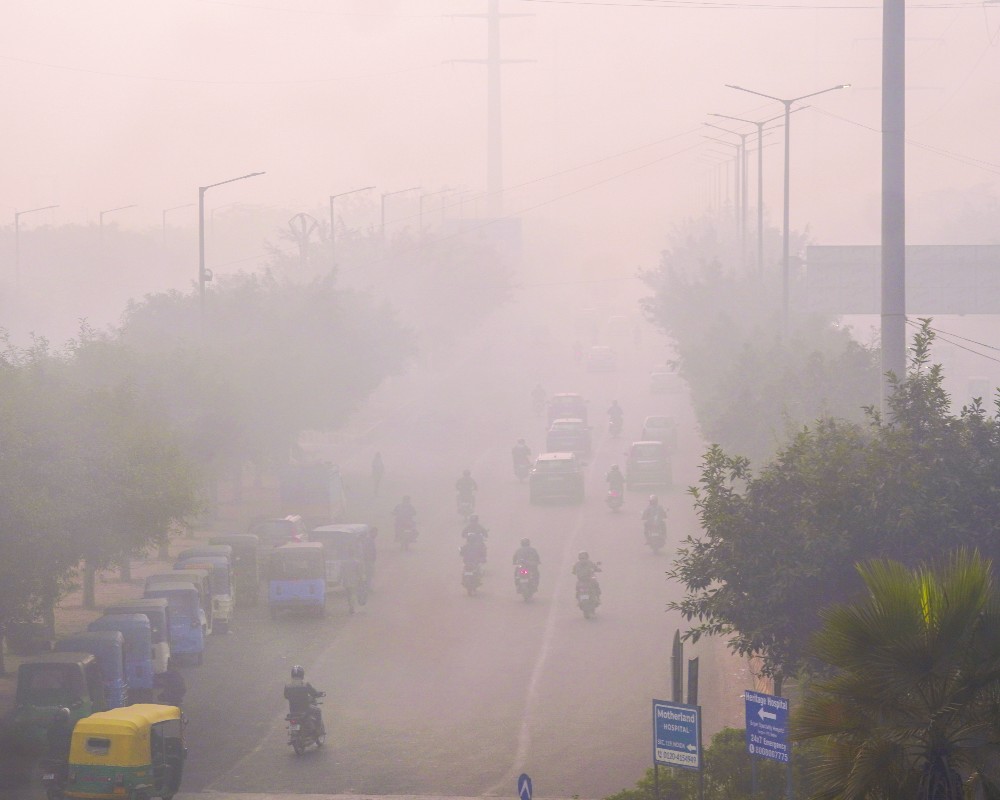
The air quality commission in the Capital on Saturday, for the first time, invoked Stage IV of the Graded Response Action Plan (GRAP) restrictions. On Saturday, the overall Air Quality Index in Delhi hit close to the 450 mark, plunging large parts of the city into thick smog and triggering emergency curbs.
With the Commission for Air Quality Management’s (CAQM) announcement, the Delhi Government has issued directions to all Government offices under it and all private offices in the National Capital Territory (NCT) of Delhi, to work on 50 per cent strength and the rest to work from home.
As part of Stage-IV, there is a ban on the entry of trucks — except LNG, CNG, electric and BS-IV diesel — into Delhi, except those carrying essential commodities or providing essential services. Curbs are also placed on light commercial vehicles (LCVs) registered outside Delhi, other than EVs, CNG and BS-VI diesel vehicles
All construction and demolition (C&D) activities will remain suspended, including linear public
projects such as highways, roads, flyovers, overbridges, power transmission lines, pipelines and telecom works.
On the education front, NCR State Governments and the Delhi Government may decide to discontinue physical classes for students of Classes VI to IX and Class XI, shifting to online mode if required.
Explaining the reasons for the worsening AQI, the CAQM said the feeble Western Disturbance approaching north-west India was the main contributing factor, and not local emissions.
“This prevailing meteorological condition has (seen a) marked reduction in wind speed, at times becoming calm, a shift in wind direction from westerly to easterly, and an increase in moisture content in the lower atmosphere. Such conditions during the winter season are conducive to the formation of smog and fog, resulting in poor dispersion and trapping of pollutants near the surface. Owing to these adverse meteorological conditions, a sudden deterioration in air quality has been observed,” a CAQM statement read.