Aravindan Neelakandan in his ‘A Dharmic Social History of India’ has sought to deconstruct the widely held views on the Indian caste system. That the Indian caste system is rigid has been a view amplified by the western scholars for decades. The birth-based discriminatory system is unique to India also somehow has been projected by the western scholars.
Neelakandan has dug deep into the world of research in his bid to demolish the western outlook of the Indian social fabric. For the endevour, Neelakandan has mined documents and research papers, which run into 56-page of references in the book.
The author, who is a well-known name in the literary world, while also being an Editor of Swarajya, establishes that the birth-based discrimination was not at all unique to India. Neelakandan backs up his claims with references to state that rigid birth-based discrimination existed in several civilisations such as China, Yemen, Europe, and others.
In China, Neelakandan writes: “Traditional Chinese society had its own social discrimination like any other pre-modern society. The system called hukou (huji) allowed the authorities to assign a person’s place, role and resources available to him or her at birth.â€
The hukou system was inherently biased against the ‘peasants’ or, in traditional Indian terminology, the ‘Shudras’, argues Neelakandan. He states that even after Mao Zedong led the revolution to bring a regime change the birth-based discrimination became only more rigid. The Chinese communist officials further solidified the birth-based discrimination, and simply shut the door on the social emancipation of a vast number of the population in China.
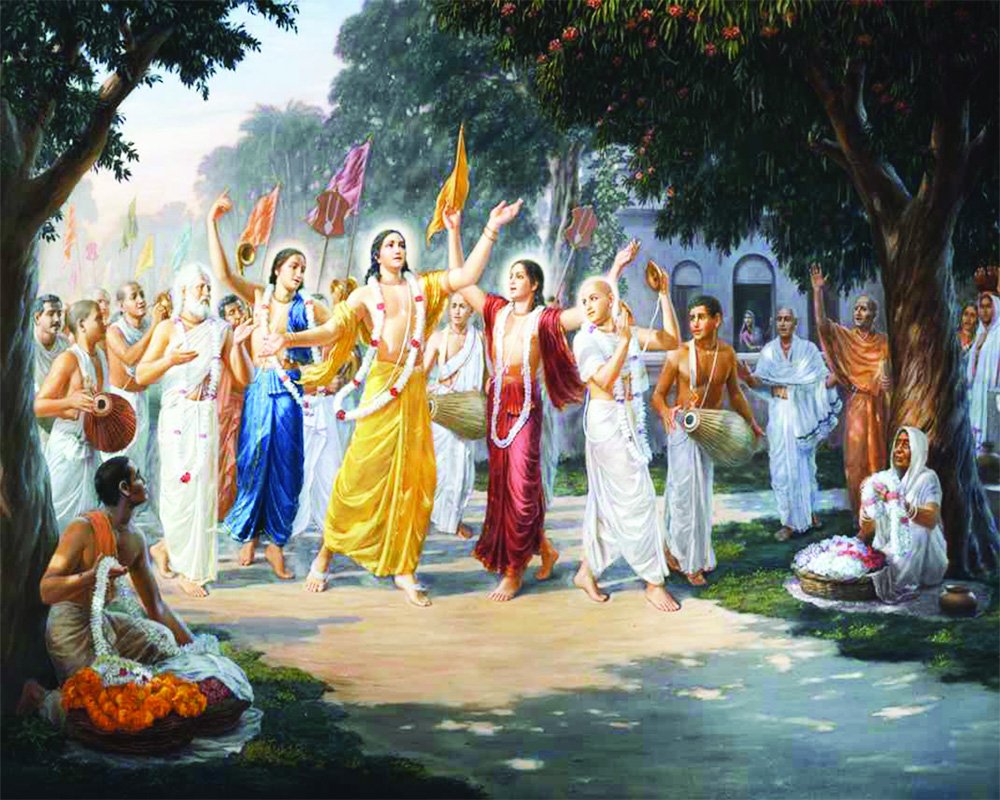
In contrast, the Bhakti movement in India became a powerful medium for the people to evolve in the social stratification. The Varna system as interpretated by the western scholars wasn’t at all a birth-based differentiation, argues Neelakandan with sufficient references. The Bhakti movement proved to be the most powerful social movement, which had its predecessors for ages in the past in which Upanishads were borne out.
Neelakandan credits the Bhakti movement for uplifting the people from the bottom of the social ladders. Indeed, the Bhakti movement also evolved into a major social force afterwards which stood against the evil designs of the British rulers. This was most powerfully seen with Suttra in Assam, states Neelakandan in the book, helping Assam to stay with India. The author rightly argues that the flow of capital proved helpful in breaking the rigid birth-based discrimination in Europe.
The serfdom in Europe, writes the author, had been notorious for practising the birth-based discrimination. It was only after the European powers became imperialist forces that people in the large number were required for deployment in the colonies that a semblance of social mobility could come out in an otherwise highly rigid European social stratification.
Neelakandan has dug out extensive references to establish that Europe, which otherwise claimed to be libertarian society, had almost practised slavery in the form of serfdom. ‘A Social Dharmic History of India’ runs into 17 chapters, spread over in 737 pages. Neelakandan authoritatively establishes that the Indian social system was not only democratic but allowed space for evolution of the people. This indeed should connect with the readers, for India’s one of the greatest epics, the Ramayana, relates to Valmiki, who until he evolved in life was a dacoit.
Neelakandan has argued his case very strongly. The book opens the space for debate. It also helps in demolishing stereotypes. Importantly, Neelakandan’s approach to the Indian caste system has the potential to open the space for a healthy discourse. The author makes a case for new social science in India. This is a timely reminder that the age-old views held be generations be challenged on the basis of facts and researches.
Neelakandan also attacks the western stereotype in depicting the Indian society Brahminical and lambasting Vedic system for propagating a ritual-based religion Neelakandan asserts that the Vedic system in fact was a way for the social emancipation of the people of all the strata in the society.
With enough references, the author asserts that the Harappan and the Vedic civilisations were part of the same continuum. They were not distinct, he argues. Neelakandan also examines Buddhism and Jainism in the book empirically. He argues that the rigidity in moral templates projected by Buddhism and Jainism somewhat disrupted the flexibility in the Indian social stratification.
Yet, readers may gain an impression that the author has pivoted the study of the caste system in his take on India’s social history. But, overall, the book brings a fresh narrative and triggers questions in minds of readers to examine India’s social history with a fresh perspective.
About the Book
Book: A Dharmic Social History of India
Author: Aravindan Neelakandan
Publisher: Ink
Price: Rs 599/-
— The author is a senior journalist and reviewer for various publications. Views are personal